E.l.f., SharkNinja, Steve Madden, Newell Prep Business Operations for AI-Focused Future


From search engine optimization to culture shifts, consumer goods companies are having to overhaul several aspects of their business operations to keep pace with emerging tech trends, many of which use AI to drive growth.
CG leaders from companies such as E.l.f. Beauty, SharkNinja, Steve Madden and Newell Brands, along with tech experts in the field, shared their take on AI at the recent Shoptalk event held in Las Vegas.
Keeping Up With AI Bot Brand Discovery
Kelly Shah-McDonnell, VP of global digital commerce, E.l.f. Beauty, and Lauren Price, SVP of marketing, COS, discussed the shift from traditional search engine optimization tactics to strategies for agentic- and generative-optimized search.
Consumers are increasingly using AI bots to discover brands and products, and the two executives shared their roadmaps for building a strategic advantage in a shopping landscape dominated by large language model-based search.
At E.l.f., the company has focused on education as a lever for execution, training internal teams to better understand how large language models are synthesizing information.
"My team is at the helm of education, so we are working with all internal cross-functional teams. It's a muscle of content creation and investing in the discovery of what the audience wants to hear and not just what we want to say," said Kelly Shah-McDonnell. "What influencers are saying, reviews, press articles, etc. We need to shift the KPIs in those areas."
Meanwhile, Price identified four dimensions that dictate success in AI-enabled search: clarity, prominence, dominance and coherence. "You have to make sure you have a very consistent, clear message about who you are as a brand. AI doesn't read nuance very well."
This is why building a brand's e-commerce site as an information warehouse — treating it as the ultimate source of truth by leaning on markdown files and video transcripts — is key to allowing LLMs to crawl and cite content accurately, said Shah-McDonnell.
In the end, what matters is that brands focus on more than just traditional SEO, using content and a credible ecosystem of information that pulls from all sources (social citations, influencer validation, and deep, technical website transparency) to win in the algorithmic race.

How a 'Jailbreak' Culture Drives Company-Wide AI Innovation
Velia Carboni, CIO for SharkNinja, said the company has set a lofty goal for innovation, aiming to launch 25 to 30 new products per year, and AI is going to be a "game-changer" to maintain that level of growth.
"We are looking to redefine how we are doing [innovation] planning, and all of that is going to be AI-enabled," said Carboni.
The company is moving toward "full-cycle" data integration. It is using AI to collect data points across all channels, including consumer reviews from global marketplaces and DTC channels.
By doing this, SharkNinja can funnel real-time feedback directly back into the product development and consumer experience teams. For example, AI analyzes the data to identify consumer pain points and vet potential product features.
Also: SharkNinja to open university research-backed AI, analytics lab
And while the tech handles the heavy lifting of data and scale, SharkNinja employees can focus on higher-value, creative tasks. This strategic shift required a change in company culture — an enterprise-wide buy-in on the idea that everyone can contribute to meeting the innovation goal.
As such, SharkNinja launched a company-wide initiative called Jailbreak. It is an internal competition that offers millions of dollars in prizes to foster organic energy and cross-departmental collaboration.
"It’s an innovation culture. The tech is so much more pervasive — not just for the tech team, but for everyone in the company."
Off-site Discovery and 'Scrapable' Data
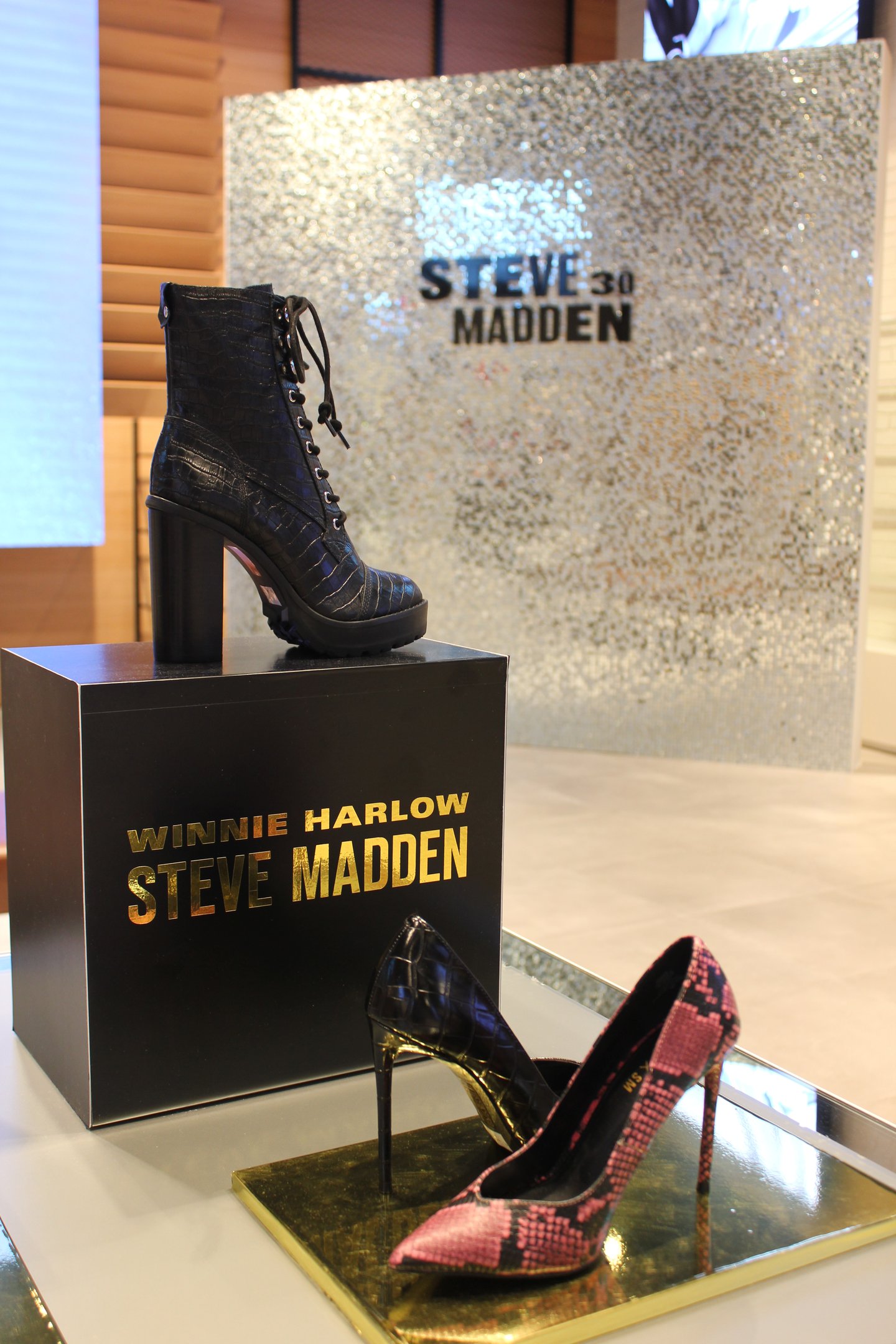
For Colleen Waters, VP, e-commerce, Steve Madden, letting go of control is what leads to success.
Because discovery is increasingly happening off-site, she said brands are having to meet consumers where they already are — and that means being present in whatever is being said across channels.
As a result, Steve Madden has focused on a data strategy for its product detail pages to optimize discovery for both humans and the AI tech scraping pages. And with trends changing so quickly, it means taking on a more experimental approach is key.
"We are such lean teams, and a fast-fashion brand, so we are leaning into that mentality because it is to our benefit that we can move fast," she said. "There's not a lot of red tape, and there's not a fear of failure. Sometimes you have to ask forgiveness and not permission."
To win in discovery, product information must be "rich and relevant."
This means using FAQ modules on product pages and AI-generated review summaries to make the site "scrapable" for LLMs and search bots.
Internal Investment Is Key to Digital Intelligence Growth
For Newell Brands, decision intelligence (DI) has come front and center as the company looks to scale tech-enabled innovation across the enterprise. But the company understands that the foundation comes first.
During a session at Shoptalk, Robert Ibarguen of Newell Brands said he's helped design a small strike team that works cross-functionally to try and bring DI to scale, functioning almost like a transmission for the company as it compiles data points from across the organization and consolidates it into a single dashboard.
The head of digital intelligence said gathering data was previously a very manual, time-intensive process. Automating the effort has required maintaining a delicate balance between the IT and business application lenses to understand when it is better to lean on outside experts vs modernizing processes with internal resources.
Tech Voices on the Frontlines
See what technology experts have to say about advancements in AI and where the top areas of opportunity still exist.
"Everybody is trying to operationalize AI within their teams and figuring out 'Are single people running entire teams of agents?' and 'How are these agents all going to interoperate with each other?' So a lot of the martech vendors out there are trying to figure out where they are able to really maintain value, given that a lot of people are building things from scratch right now. But adoption is surprisingly low still. I think that everyone needs a bit more guidance on how to do it, more hand-holding." — Harry Chemko, Co-Founder and CEO of ShopVision
"Content was always king in our industry, but context is king with these agentic and AI solutions. You need to feed it the right context so you can understand where you're going. It's not just a prompt; it's the context behind the prompt. But I'm learning that content is actually still king, it's just a different type of content. The LLMs that are agentic models are supposed to be independent. They can't be influenced on purpose. So what brands are doing is they're publishing content to influence [the bots], and the LLMs pick it up." — Chris Daniel, GM, Consumer Products & Services Industry, Toptal
"I think the No. 1 problem is the amount of fragmentation that occurs either in data providers or in media channels. There's just so many ways that you can reach a person and it takes a strong MarTech stack and data stack. AI is meant to help you gain efficiencies and streamline decision making, but you still have to make good decisions with that data. And so AI can't make those decisions for you. It can only help surface insights, surface intelligence, and stitch some of those data and identity issues together. — Erich Parker, SVP of Integrated Media at Blue Chip
"Data harmonization has become really easy. Before, it used to be this big five-year transformation requiring big teams of people and big systems. Today, you see some really good companies out there who are saying, 'Hey, we could take messy data and very quickly embed that with intelligence around who is buying that product, who is cross-shopping other products. What is that product availability?' Because what happens is when data comes into systems, these companies are really smart at building triangulation models, semantic models that work with different data types." — Shaveer Mirpuri, Co-Founder, CEO, Insite AI
"When talking about building and deploying agentic AI, what's actually performing best if you look at the data is narrower use cases … specific, trainable, provable abilities. You're probably going to have hundreds of them running throughout your business in multiple places. And that's kind of where we're going." — Jason Cottrell, President, MACH Alliance
"I believe AI is starting to get better ingrained into executable processes. It's less about extracting knowledge and then requiring humans to decide what to do with that knowledge. We are starting to move toward designing automated actions. But I think it requires two pieces. The value in AI is in the prediction, which the models today are so much better than they were five years ago. Then there's the judgment piece, which traditionally has been a human-owned area. It will come down to this ability to combine them." — John Dubois, Partner, Global Retail AI Co-Lead, EY