Clorox, Southern Glazer’s, SmartSKN Turn to Predictive Analytics to Sharpen Supply Chains


Driven by persistent global disruptions and the need for hyper-accuracy, established companies such as The Clorox Co. and Southern Glazer's Wine & Spirits and agile startups such as SmartSKN are migrating away from manual supply chain planning in favor of predictive analytics.
The shift toward AI-informed sourcing is rapidly transforming how the industry forecasts demand, manages inventory and mitigates logistical risk.
Clorox is synonymous with dependable standards of cleanliness, and achieving that requires spotless supply chain processes.
The company has been implementing predictive analytics in the procurement function, a move that vice president and chief procurement officer Eva Choe calls a practical and operational decision.
"Our prior systems and processes were highly manual, time-intensive and not delivering the level of accuracy we needed," Choe explains. "That created friction in planning and made it harder to move quickly with confidence."
The rollout began nearly a year ago with the goal of improving pricing forecasting across the cost of goods, including major commodities and categories officials purchase, Choe says. She and her team have been refining it since, and the work is paying off.
"By applying predictive analytics to pricing forecasts, we've significantly reduced manual inputs, improved forecast accuracy and strengthened the data that informs budgeting and decision-making," Choe says.
She adds that in some areas, forecast accuracy has "improved to within a very tight margin of error, while materially reducing the time required to build forecasts."
The implementation is part of Clorox's broader digital transformation efforts to simplify processes, modernize tools and build stronger digital capabilities across the organization to support faster, more informed decisions.
Clorox is far from alone. Roughly one-third of consumer goods companies and retailers are currently using analytical or predictive AI, with about 1 in 4 using generative AI, according to CGT's 2026 Retail and Consumer Goods Analytics Study. Top uses for AI adoption among both are supply chain planning and execution.
"For CGs, demand forecasting and inventory planning are considered top analysis areas for the upcoming year, likely due in part to the persistent supply chain challenges they've been facing," the report said.
Also: Coca-Cola, Newell, Clorox — three distinct roadmaps for the CPG AI journey
Anticipating Shifts in Consumer Demand
Food and beverage companies in particular are prioritizing smarter and more predictive capabilities, according to Lineage's Cold Chain Insights Survey. The focus is on transportation optimization (45%), real-time visibility (44%), AI-informed decision-making (44%) and warehouse automation (41%).
That resonates with alcohol distributor SGWS, which is using predictive analytics to improve and speed up decision-making across the entire supply chain, says Diego Fonseca, vice president of supply chain and logistics.
Machine learning-based forecasting and demand-sensing models help anticipate shifts in consumer demand, improve forecast accuracy and enable faster adjustments to inventory and purchasing plans, Fonseca says.
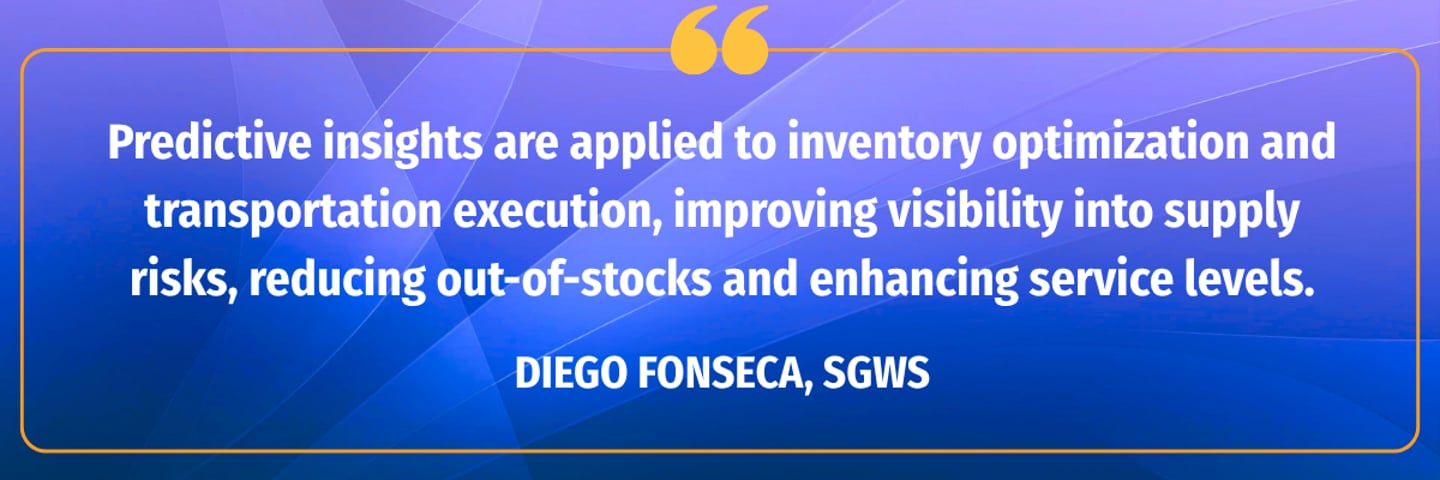
"Predictive insights are also applied to inventory optimization and transportation execution, improving visibility into supply risks, reducing out-of-stocks and enhancing service levels."
These capabilities are increasingly supported by AI-driven tools that translate data into actionable recommendations, allowing teams to focus more on strategic decisions while improving agility, resilience and efficiency across the supply chain, he says.
Deciding How to Distribute Inventory
Startup consumer skincare company SmartSKN has built AI-driven, on-demand manufacturing for personalized products. As part of that, the company has recently begun utilizing predictive analytics — but not in the traditional sense, says CEO and co-founder Val Neicu.
"We don't mass produce," she says. "Nothing sits on a shelf waiting. Everything we make is triggered by real demand at the moment, which changes how you have to think about forecasting entirely."
In fact, Neicu says the biggest shift "was realizing we shouldn't be forecasting finished products at all." Instead, the company is forecasting ingredients.
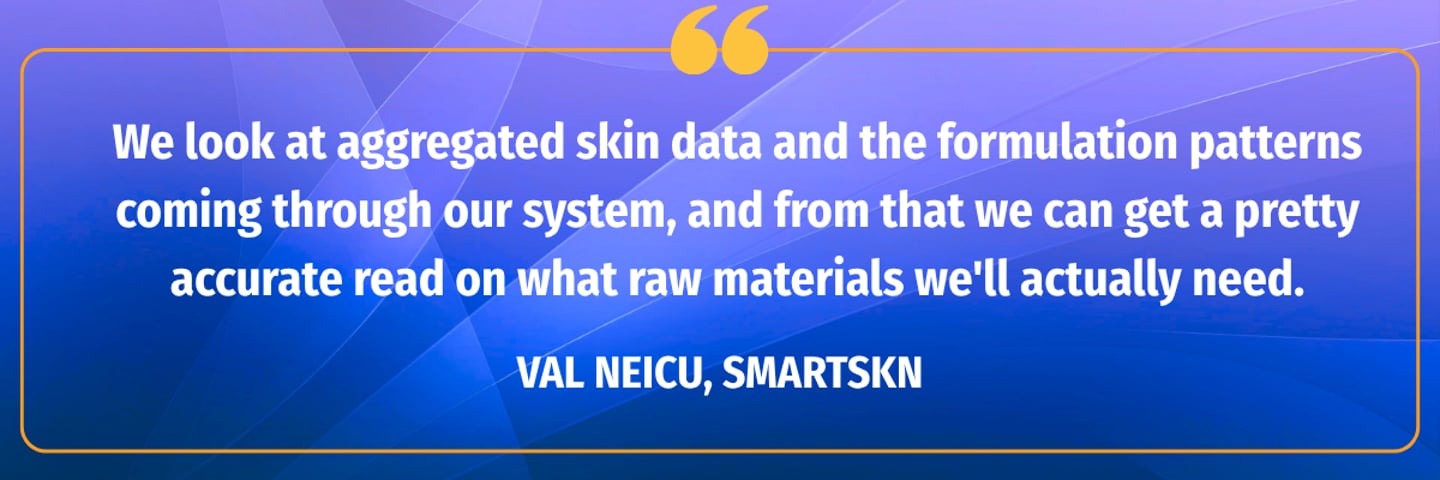
"We look at aggregated skin data and the formulation patterns coming through our system, and from that we can get a pretty accurate read on what raw materials we'll actually need instead of guessing how many units of 'SKU X' to produce, which, in our model, doesn't really exist anyway."
Further, SmartSKN has real-time visibility into ingredient usage across its distributed robotic labs, which Neicu says has been beneficial for replenishment.
"We don't overstock, which matters a lot with active [ingredients] since some of them have short shelf lives and you're basically burning money if you sit on them too long," says Neicu.
Production decisions are handled differently as well. Because formulations are generated at the moment of demand, the intelligence piece moves upstream, Neicu says. "It lives in sourcing, batching and logistics planning more than in the production line itself."
Each of SmartSKN's labs is essentially a micro-fulfillment center.
"Predictive modeling helps us figure out how to distribute inventory across those locations so shipping stays fast and costs stay down, without sacrificing responsiveness," Neicu says.
Although the company is early on in the process, "moving away from centralized forecasting toward distributed, real-time prediction has genuinely changed how we think about supply chain," Neicu says. "It's a different mental model."
Forward-Looking Pricing Insights
Predictive analytics in procurement means pricing forecasts are fed into broader supply chain planning. The technology generates forward-looking pricing insights across commodities and categories, serving as key inputs into budgeting and planning, Choe says.
It has also reduced manual effort because forecasts that previously required significant manual work are now generated through analytics, allowing teams to focus on reviewing outputs and act on insights, she says.
And it has improved confidence. "More reliable pricing data supports faster, more informed decision-making across the supply chain," Choe says.
As Efficiencies Grow, Team Oversight Remains Critical
Choe's teams have also seen significant gains in efficiency and effectiveness. For example, reducing manual inputs in forecasting and contract processes has delivered meaningful time efficiencies, she says. “In some procurement workflows, we are seeing time reductions in the range of roughly 30% to 40%."
Accuracy has improved because pricing forecasts are more reliable and consistent than prior approaches, which strengthens planning decisions, Choe says.
Automated sourcing and intake processes allow procurement teams to manage a higher volume of requests, as more of the process becomes self-service for internal stakeholders, Choe says. This is also helping to simplify workflows, allowing teams to focus on higher-value work.
"In contract workflows, better visibility into terms, risks and bottlenecks is improving how work moves through the system," she says.
The teams now spend less time assembling inputs and more time reviewing outputs and making decisions.
"Processes that were previously fragmented across multiple stakeholders are becoming more standardized and transparent," she says.
Human oversight remains central, Choe stresses. "AI can surface insights, flag risks and handle administrative work, but people are still responsible for approvals, negotiations and supplier relationships."
Increasing Use Cases and Payoffs
Although SGWS has been using predictive analytics to forecast sales for more than 10 years, everything transformed in 2024 with the introduction of machine-learning forecasting, Fonseca notes.
"Since then, more use cases have been rolled out across our end-to-end supply chain, especially in replenishment, logistics and execution," he says.
Even years later, the motivation to use predictive analytics continues to be about creating better plans and signals to improve the reliability of the supply chain and maximize sales.
SGWS has improved its forecast accuracy by 10 percentage points over two years, which Fonseca says, "allowed us to reduce inventory by around 7% while delivering all-time high fill rates."
The product mix the distributor is carrying in inventory is healthier because it has better signals on what to buy, which is especially relevant for long-lead wine and spirits, according to Fonseca.
"Additionally, our out-of-stock predictions, used by our replenishment and execution teams, are also helping us achieve these great results, as we now stay ahead of unexpected logistical delays and higher-than-expected sales by expediting orders before running out of product," he says.
Predictive analytics has also meant moving from being reactive to proactive.
"The team now has more time to work on process improvement projects," he says. "More recently, the new technology advancements happening around AI are allowing this approach to be expanded, becoming vital for our ways of working."
Still, Fonseca admits that change is never easy, and prioritizing the user experience "has become more important than the new analytics and technology themselves. Having business experts dedicated to … [the] rollout of these new tools is critical for the success of such initiatives."
Only the Beginning
Predictive analytics, says Fonseca, is just the tip of the iceberg.
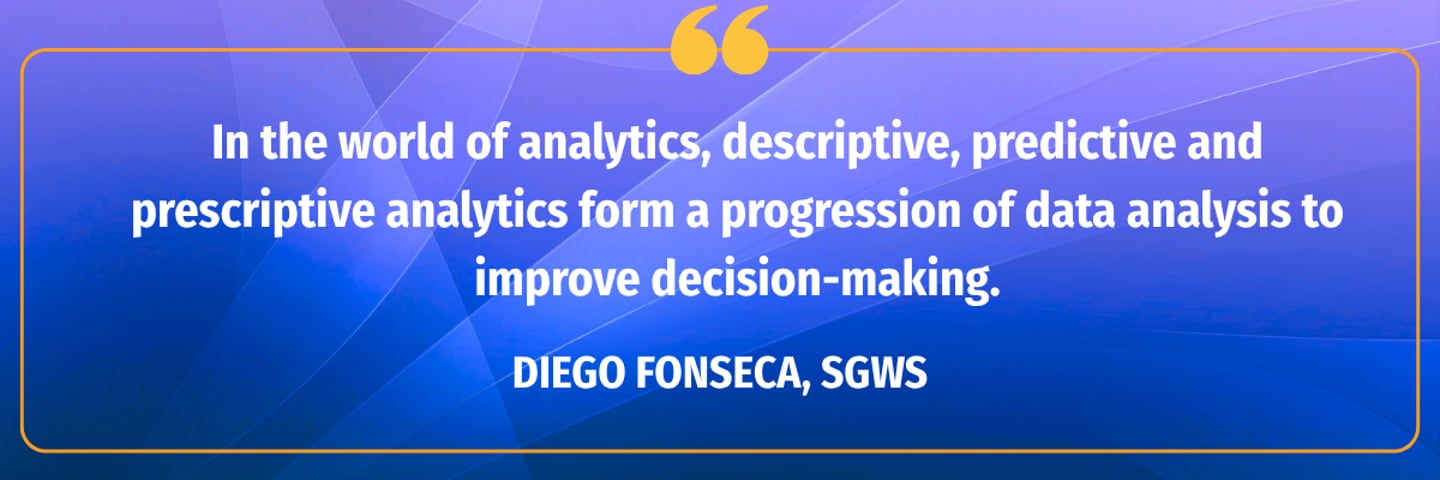
"In the world of analytics, descriptive, predictive and prescriptive analytics form a progression of data analysis to improve decision-making."
Analytics is about finding out "what happened," predictive works on "predicting the future" and prescriptive is intended to recommend actions based on the first two.
"We have gone beyond predictive analytics as we already have AI agents running on prescriptive analytics, suggesting forecast and PO changes to our planners," says Fonseca. "This was only possible because of how fast AI is evolving and becoming embedded in our systems and platforms. We plan to expand this concept on all fronts to continue to improve the reliability of our supply chain and maximize sales."
For Clorox, as the company expands intelligent automation across procurement, the next step is scaling impact and expanding and integrating contract lifecycle tools to handle more volume and complexity while improving cycle times.
Predictive analytics goes beyond efficiency, says Choe. "Faster processes matter, but the bigger benefit is better inputs into planning and decision-making."