L'Oréal AI Roadmap to Overhaul Operations, Consumer Experiences, Workforce

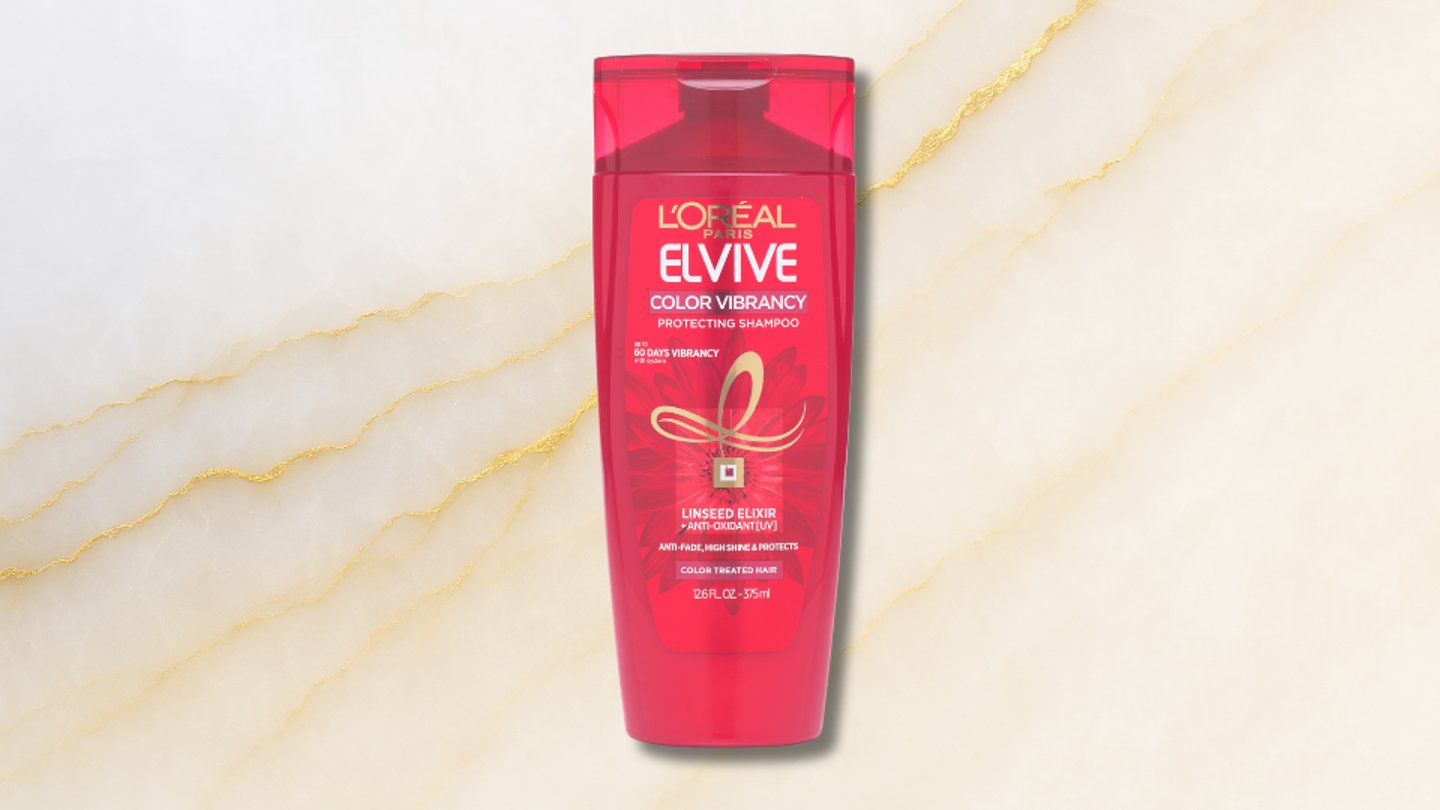
L'Oréal recently announced it is undergoing an IT transformation underpinned by enterprise-wide, AI-enabled capabilities.
Samuel Du Retail, general manager of artificial intelligence, data and shared services, provided details about the company's AI roadmap during April's shareholders conversation.
The tech overhaul is a response to a paradigm shift that's been occurring over the last two years, according to Du Retail. He said that 39% of consumers already used LLMs to learn about products in 2025, and on ChatGPT alone, they exchanged more than 280 million messages per week related to health and beauty.
As a result, L'Oréal has established an accelerated AI journey around three pillars: AI for consumers, AI for business lines and AI for employees.
"L'Oréal's AI strategy is holistic and ambitious. It aims to integrate AI at all levels of the company, from relationships with the consumer to the whole of our professions, while valuing the developments of our employees and creating value for our shareholders," CEO Nicolas Hieronimus said during the investors call. "We see very clearly that iterative tasks like data compilation and others can be taken up by AI very well, and that frees up some time and energy for employees to focus on higher-value tasks."
Governance & Security
At the heart is responsible and supervised AI with personal data protection in mind.
"We work to address potential algorithmic biases to ensure our systems are more inclusive and work effectively for all skin tones and hair types," said Hieronimus. "We measure the energy consumption of our technologies and prioritize the most energy-efficient conversational models. We work with data center partners who prioritize low-carbon energy sources."
The technology, he said, is not meant to replace "the women and men at the heart of L'Oréal's success," but to "empower them in driving accelerated growth."
Consumer Impact
The company is creating beauty diagnostic platforms, such as BeautyGenius, fueled by its proprietary data, to aid consumers in their AI-led searches. The company's plan is to lean into clear and explicitly stated product benefits that AI bots can pick up and amplify to suggest L'Oréal products instead of competitor brands.
Also: Estée Lauder partners with Google for AI-enabled scent personalization tool
Business Integrations
AI agents are operationalizing business lines at L'Oréal, allowing different functions to use the automated tools in customizable ways.
"We have developed an AI agent that detects the nature of the consumer's request, gathers relevant response elements in the appropriate language, and automates response phrasing and delivery," said Du Retail.
This has led to expedited response times, freeing up advisers so they spend up to 80% less time on administrative tasks and focus on more meaningful interactions.
Additionally, the company has leveraged visual recognition agents to help its sales reps verify in-store product availability and detect potential stock shortages, reducing verification time by over 50% with 99% reliability.
Another use case is a documentary AI agent that enables more than 10,000 users within research and marketing to securely access over 100,000 proprietary marketing studies across 70 countries. The agent then synthesizes the relevant reports, identifies global consumer trends, and translates insights and actionability to international marketing teams.
Also within marketing, employees can generate brand images and videos securely through a CreAItech platform, allowing creative teams to stage products, textures and ingredients in just a few minutes and with a few prompts. And within R&D, AI is being used to improve how teams understand consumers, discover new molecules and develop new formulas.
"AI allows us to create digital hair that reacts to active ingredients similarly to its physical twin, enabling highly reliable predictions on new formula benefits. In just four years, we have tripled the number of molecules tested and reduced development time by a factor of four, making research and innovation faster and more precise." — Samuel Du Retail, GM, AI, Data Shared Services
Workforce Optimizations
The company has already optimized its training programs with AI; however, it will also launch a program called AmplifAI in May that will allow employees to self-assess their AI knowledge and identify areas for improvement.
"Our goal is for 40,000 employees to have completed the self-assessment by the end of the year," said Du Retail.
To support that initiative, the company will leverage its proprietary GPT tool, which launched two years ago and is now accessible to 56,000 employees. Du Retail said 21,000 use it at least once per day, and over 1 million conversations take place each week.
The company also recently launched AI companions to L'Oréal GPT, through which employees can create their own personal agents to help with writing, brainstorming, project analysis, translation and planning.
"Now we can optimize our office tools, spreadsheets, presentation software and internal messaging systems," he said. "Over 22,000 individual companions have already been created with 254 broader companions under business governance."
While some of these base applications have existed in the IT system for a few years, the company is working to mainstream them and improve their performance through AI capabilities.
The Building Blocks of AI Integration
L'Oréal's IT work to lay the foundation for these types of integrations began as early as 2010, according to Du Retail. This included restructuring the company's data model — consolidating 115 years of beauty information, 17 terabytes of proprietary insights across eight key areas of business, and knowledge from 8,000 experts in technology and digital fields.
"These essential preparatory steps now offer us tremendous opportunities because without well-structured data and digitized processes, large-scale AI is simply not possible," he said. "Building on these strong foundations, our ambition is to become one L'Oréal powered by AI, with teams augmented by AI across all our activities."
Hieronimus said the company has so far harmonized 20 IT systems, data and processes to create a unified operational language at scale. This has contributed to building a more resilient supply chain and operations that can adapt to real-time challenges.
"We have the objective to integrate the best technological tools at the heart of our organizations and our ways of working to make them a long-term competitive advantage for us. All of these investments future fit into one L'Oréal transformation agenda, which gives an overall consistency to the transformation of the group in the beauty market, which is more and more fragmented." — CEO Nicolas Hieronimus
The company expects to have completed approximately 60% of its total IT transformation by the end of the year.