Bazooka's Big Pop: Transitioning From Legacy Systems to Predictive Analytics


Bazooka Candy Brands, the maker of Bazooka bubble gum and Ring Pop, has undergone a massive data reorganization, consolidating fragmented data and using analytics and AI to better support day-to-day planning across the organization.
The initiative required unifying six different business functions on a connected planning platform, according to CIO Sankar Karuppasamy, who led the effort.
It has unlocked advanced predictive analytics to not only navigate tariff volatility but also improve forecasting accuracy and expedite operational decision-making.
Building for the Future
The 90-year-old legacy company needed a reboot as it looked to keep up on expanding distribution capabilities from its competitors. This is why Karuppasamy looked to a unified data foundation, working with external partner Anaplan.
This first required an audit of existing data processes and infrastructure.
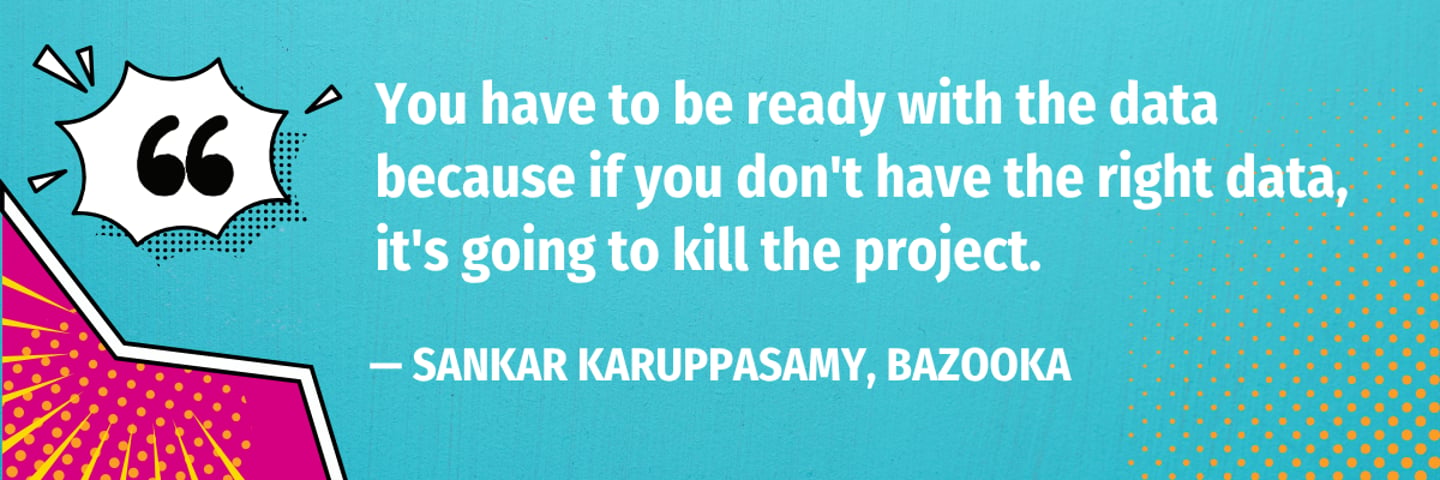
"You have to be ready with the data because if you don't have the right data, it's going to kill the project," Karuppasamy tells CGT. "The cleanliness of the data, the governance of the data … you'll uncover a lot of the data issues and process issues of your current state."
Also: Inside Perfetti Van Melle's data-centric supply chain modernization
Another main consideration was getting internal alignment for this type of project. Karuppasamy wanted to ensure that there was not just executive leadership alignment, but also that departmental subject matter experts were on board.
Karuppasamy said change management was one of the biggest challenges to address because if they couldn't get board-level approval, nobody was going to listen.
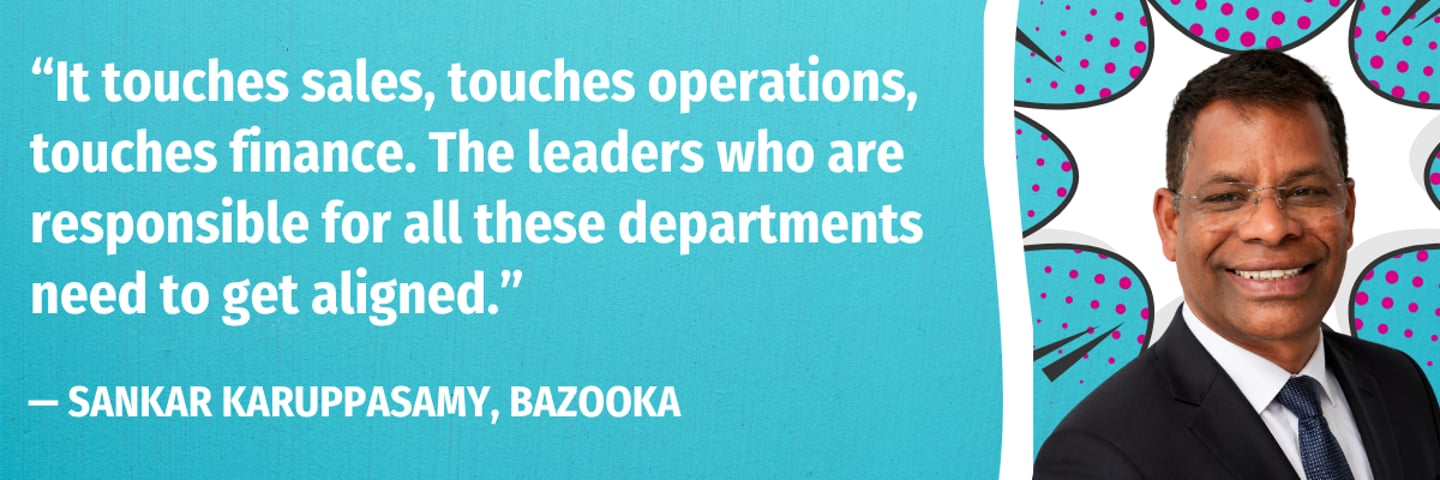
"Our ELT needs to be aligned, and then it touches sales, touches operations, touches finance," he says. "The leaders who are responsible for all these departments need to get aligned."
As part of this, Karuppasamy blocked calendars for employees, ensuring they had time to get familiar with the tool and how they could leverage it within their own functions. This included face-to-face workshops where they could learn the practical applications of the technology.
And Then, AI
The goal is to get the foundation to a place where the organization can then apply AI use cases on top of the data layer.
"We've done some of the AI enablement in the module that we implemented, which kind of helps us because Anaplan is pretty open. You're not forced to use an AI or machine learning model," he says, adding that if there is a specific use case that the company has in mind, it can then build its own model and integrate it within the platform — something it has done with demand planning.
Because Bazooka's seasonal products are very specific, says Karuppasamy, the company had an easy time automating its forecasting, pairing machine learning to identify patterns and integrating that into the data platform.
"We have an ML model run and figure out, OK, this would be the demand for your seasonal products … whether it's Valentine candies or Christmas candies or Easter candies … we now know exactly what we need based on prior patterns," he says.
Setting Realistic Standards
Every company is on a distinct data journey, and so Karuppasamy often reminds stakeholders that Bazooka's progress can't be compared to the likes of companies such as The Hershey Co., Mars and Mondelez International, which have significantly larger budgets.
Instead, he looks at comparable organizations, asking himself, "How can we be scrappy and faster to market?" It's a principle the company applies to its infrastructure design and has been a key approach in building interconnected planning in a single platform.
For anyone else going through the journey, he recommends the same: get on one platform instead of trying to stitch together solutions. This has been the roadmap for streamlining siloed functions at Bazooka.