Unilever, Newell, Levi's Lead the CPG Pivot Toward 'Internal Multiplicity' and Agentic Workforces


In recent years, AI technology has transformed from a tool that introduces basic automations for business efficiency to a true workforce co-pilot. But as consumer goods companies begin to scale agents across their enterprises, the road to agentic orchestration is anything but simple.
The space is poised for significant growth. Forty percent of enterprise applications will be integrated with task-specific AI agents by the end of 2026 — a drastic increase from less than 5% today, per Gartner research.
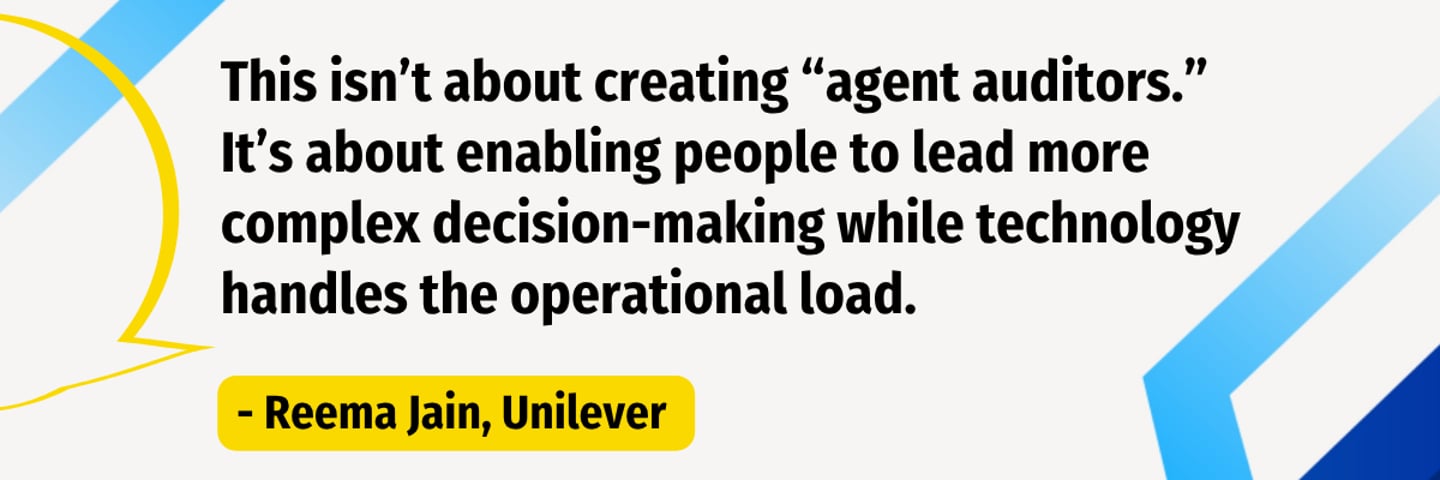
“AI agents will evolve rapidly, progressing from task and application-specific agents to agentic ecosystems,” Anushree Verma, senior director analyst at Gartner, said in a statement. “This shift will transform enterprise applications from tools supporting individual productivity into platforms enabling seamless autonomous collaboration and dynamic workflow orchestration.”
For example, Levi's is working with Microsoft to automate tasks enterprise-wide with a super-agent that acts as a middleman to individual specialized sub-agents.
However, complexities around governance, measurement, and employee knowledge and buy-in must be addressed early on or companies risk failing quickly.
According to Gartner insights supplied to CGT, companies need to understand that orchestration is not a single “plug-and-play” system, but a layered ecosystem that combines planning, execution, visibility, analytics and cloud-native AI, alongside clear decision governance. As such, human expertise and process maturity remain essential.
Additionally, the company states that technology should augment, not replace, decision-makers in the near term.
Establishing the Groundwork
Agentic orchestration requires a shift in how companies store and use data to make decisions.
According to Abhideep Dasgupta, manager of value engineering at Celonis, consumer goods companies need to allow AI to not only come up with insights from data, but also take action against it.
His company advocates for introducing a semantic foundation that adds context to the information being aggregated.
"This is where we think about adding a full intelligence layer between your data layer and the agentic action layer on top," he said during the recent Analytics Unite conference.
It's a tech solution Celonis provides that he says addresses the disconnect between where data is actually stored — in ERP, DRM and DM systems — and where decisions are made, such as within dashboarding, planning and supply management tools, he added.
Simply bolting on AI to legacy systems doesn't work, said Dasgupta. It's just going to give companies answers in a vacuum, considering only a specific part of the business rather than looking at the bigger picture holistically.
For Newell, the first step has been to set clear prioritization and governance parameters within a model that focuses on disciplined scaling — proving what works and embedding it into business operations over time. Tambi Younes, VP of e-commerce at Newell, tells CGT that this means defining primary vs. secondary goals at the system level and setting clear guardrails.
Reema Jain, chief information officer for Unilever, is of the same mindset, stating that, at the foundation, the company has focused on governance, observability and interoperability.
Levi's began this process by consolidating application workloads, relocating them from on-premises data centers to a private data center environment in the cloud. The company also added intelligent automation capabilities to power security agents and policy orchestration to create a zero-trust security model that can eventually support scalability.
Agents in Action
Among the top digital investments over the next two years for consumer goods companies are agentic AI for inventory management (62%) and supply chain orchestration platforms (57%), per Gartner.
And according to CGT's 2026 Retail and Consumer Goods Analytics Study, agentic AI is expected to help the most in inventory planning, pricing and allocation (for CGs), and consumer relationship management, consumer-facing service and social media (for retailers).
How to Reap Efficiency Benefits
Newell wants teams spending less time on manual execution — like building or updating content at scale — and more time on optimizing performance, testing and understanding what’s resonating with consumers
According to Younes, the company is preparing for that shift by:
- Keeping humans focused on exceptions and judgment-based decisions.
- Establishing structured workflows and guardrails to reduce constant review.
- Building automated continuous testing into internal agentic build processes.
Levi's, much like other companies leveraging the technology, will use agents to simplify complex and repetitive work across the enterprise. Specifically, it is launching capabilities across IT, human resources and operations.
Unilever sees the potential for applications in supply chain, procurement and customer operations.
And Newell's near-term goals include expanding content creation and optimization across digital and retail touchpoints; enhancing analytics and insight generation to accelerate decision-making; and supporting customer engagement across the consumer journey.
"For example, in digital content, we’ve significantly increased our ability to produce and optimize product and campaign assets — enabling faster launches and more consistent execution across channels," says Younes. "From there, we’re evolving toward more connected workflows — where AI can support end-to-end processes, like bringing a product to market or optimizing performance in real time."
With so many use cases in the field, measurement becomes tricky. For this reason, Younes says Newell will manage an internal multiplicity model through a shared set of business objectives "rather than operating independently against isolated KPIs."
In psychological terms, internal multiplicity refers to having multiple distinct identities, parts or "selves" sharing a single mind and body. And when it comes to agentic orchestration, it can be applied to a model where sub-agents all report back to a centralized mind-hive or parent AI.
"That ensures decisions are grounded in what matters most to the business overall," he adds.
Unilever is taking a similar approach, deploying agents with "clear business ownership, explicit objectives and defined guardrails."
"In any large enterprise, tension between objectives is normal, and agents are no different. But we’re not leaving these situations to chance or to agent-to-agent negotiation," says Jain. "These structures minimize collision points and ensure agents operate within a shared strategic direction."
And when trade-offs do emerge, humans stay firmly in control, she says.
"We bring teams together quickly, use transparent observability to understand what each agent was optimizing for and make deliberate decisions about the path forward," says Jain. "The more we learn from these cases, the sharper our governance becomes, and that’s the strength of treating this as a journey, not a static model."
Human Problem-Solving Over Agent 'Perfection'
Perfection is unachievable. Even with humans providing validation, companies will find errors and will have to identify the difference between AI logic failures and issues with prompting.
It's for this reason that Unilever is investing heavily in agent observability, allowing the organization to trace an agent’s reasoning, data sources, tool selection and action sequences so it can pinpoint whether the issue came from the agent’s internal logic or from the human-provided objective.
Younes says this rolls into the importance of defining roles. Within traditional SaaS development, engineering is kept separate from QA to remove bias and emphasize specialization. With agentic builds, this, combined with ongoing monitoring and structured workflows, will allow Newell to see inputs, decision paths and outcomes so it can diagnose where something broke down.
What's even more important than diagnosis, says Jain, is using any user or agent errors to raise the bar moving forward, improving agent design, strengthening training and sharpening guardrails. It's one of the benefits of an ongoing partnership with Google Cloud, which gives Unilever quick access to these learnings, she adds.
Labor Considerations
Researcher James Hutson has flagged concerns over a "bifurcation" in the labor market related to agentic orchestration.
While agents compress process chains, they could remove traditional "apprenticeship" pathways where junior staff gain institutional knowledge through routine data work, according to his 2025 paper, published by Lindenwood University.
To prevent that "knowledge trapping," he suggests implementing "AI-plus apprenticeships" to pair real production tasks with supervised exposure to AI workflows, ensuring humans remain "in the loop" for strategic learning.
Additionally, if human involvement lessens, companies could see the cognitive muscles of their employees weaken as they rely more on machines to do the heavy lifting, according to a study from Philip Morris.
Tapping Into Human Expertise
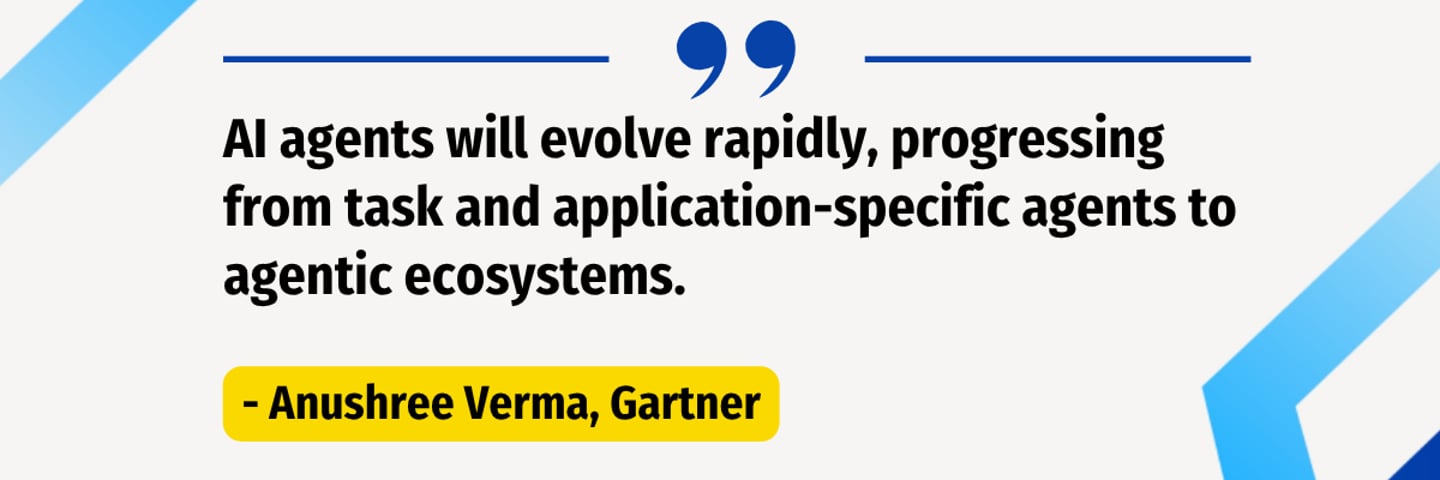
While oversight is necessary, introducing AI shouldn't be about creating "agent auditors," Jain says, but instead enabling employees to lead more complex decision-making while technology handles the operational load.
Both companies agree that expertise always has to be human-centered.
"Institutional knowledge deepens faster when people are freed from rote tasks and empowered to operate at a higher level," says Jain.
Younes agrees, stating that the strongest operators are those with deep domain knowledge.
"Our Agent Ops principles are designed to ensure oversight is purposeful, not overwhelming," she says.
"This means targeted alerts, transparent reasoning and clear escalation channels. This helps teams stay focused on interventions that move the business forward, not micromanagement," Younes adds.
And as employees become more comfortable working with intelligent systems, AI agents complement their functional expertise, according to Jain.
Unilever is supporting this transition by encouraging continuous learning, hands-on experimentation and guidance from tech partners.
With those steps in place, agents become capable of handling more repetitive and data-driven tasks, while teams are stepping into roles that demand stronger judgement, cross-functional thinking and system-level awareness, says Jain.
In the end, AI tools are never enough on their own.
Agentic orchestration requires a "disciplined approach to redesigning work and keeping people at the center," says Younes.