Hershey, Diageo, Target, Sephora: Marrying Business Objectives and Consumer-Centricity in Intelligent Data Integrations
Developing a data strategy isn't always easy. According to Greg Pederson, director of data and analytics for Target's food and beverage business, it's really about "a converging of the truth and working through some of the complexities."
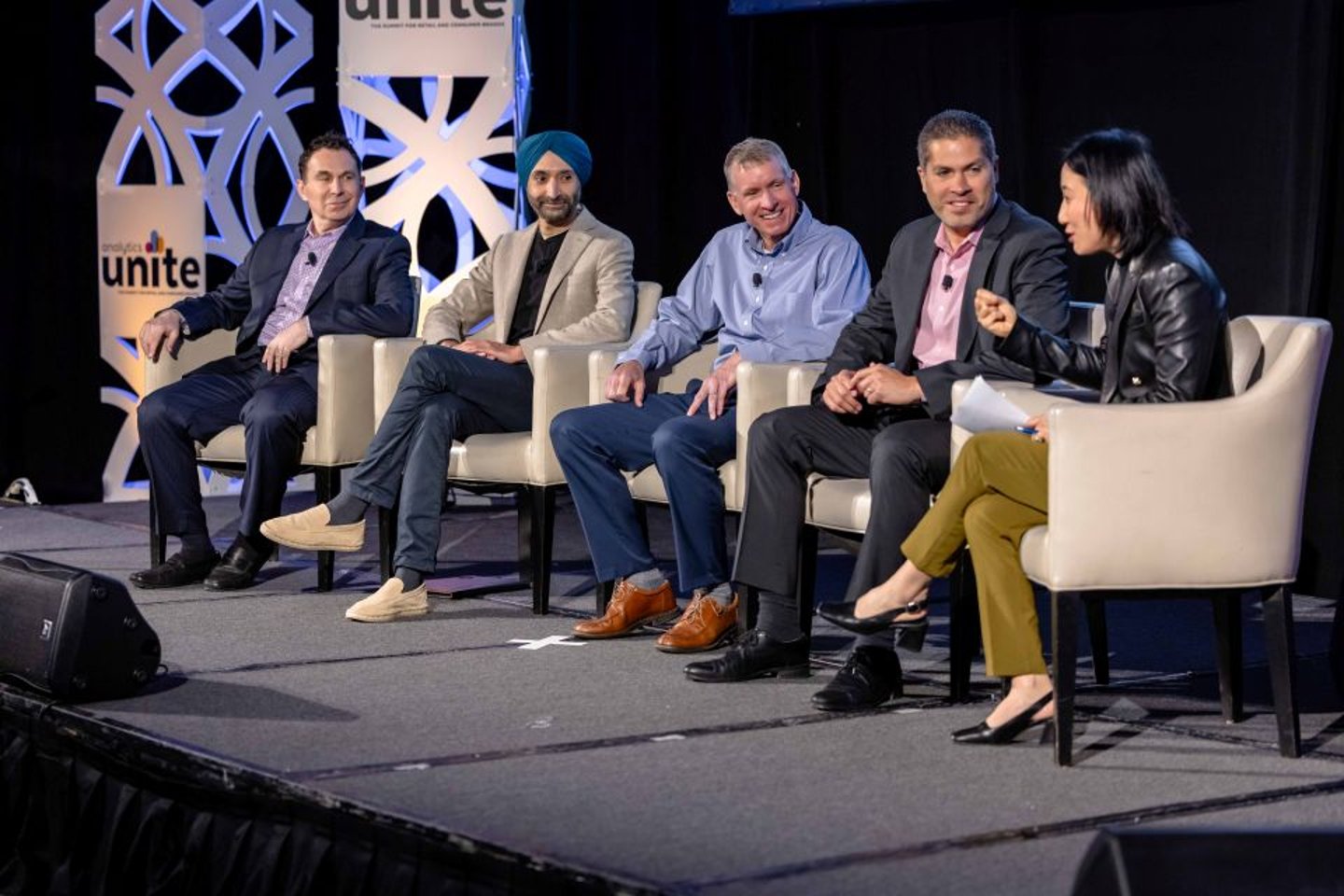
Pederson shared insights on rethinking the approach to data for the age of intelligent integration during the recent Analytics Unite event.
He was joined on stage by panelists Gene Kholodenko, CIO of The Hershey Co., Manbir Paul, SVP of unified commerce at Sephora, and Carlos Luis Pineda, head of data and analytics at Diageo, who all shared how they are prioritizing their data strategies during a time when speed, trust and interoperability are key to staying competitive.
“Business voice is also imperative to have front and center,” continued Pederson. “This is not a tech initiative; it’s tech and business together. But the business priorities and outcomes need to be thought through carefully.”
At Target, the company begins with what’s most important (guest experience in stores is a high business priority) and those initiatives drive goals in the data and analytics ecosystem.
Kholodenko agreed that data strategy begins with solving business problems.
“When we think about the bets we make, and how we increase the probability of good outcomes, that is absolutely foundational to what we need to accomplish together, and the achievement of our business goals,” he said.
Empowering people on the front lines with the right actions is not only easy to measure, said Kholodenko, “it’s what drives the business forward; it’s just powered by technology."
Paul agreed that “the value part is non-negotiable,” and suggested getting as much data as possible. He also stressed, however, that building emotional connections and personal experiences is key.
“Focus on creating the value from the brand you are driving and use technology to enable that,” he said. “Most of us are not in the data business per se. Most of us are in the CPG business. Our companies don't win by having better data; they win by meeting consumer needs,” agreed Kholodenko.
Pineda said the problem doesn’t lie in the data for him; it’s in simplifying the decision-making process. His industry is dealing with a declining spirits category and businesses that operate differently in each state.
“We try to ask … where are the actions that we can take to repair that decline? And is there a way to customize states and drive those systems? That’s how we’re changing the dynamic,” he said.
Rethinking data strategies comes down to trial and error as well as learning (and relearning) the hard way.
“It's so easy to be enamored with tech and how things are changing so fast, but remember that we're here to solve business problems and fuel business outcomes,” said Pederson. “It’s common to have a problem to solve, get 10 people in a room, but you can't agree on what the problem is.”
He said that while debate is normal, teams should be working with the same facts at the same time to "converge on what the problem is.”
Paul agreed that connecting the dots is related to the opportunity a company is driving towards.
“You can talk about having the data and solving the problem, or instead say, 'I have this problem and let me look for the data that can help me solve it.'”
“Focus on the 'what,'” said Kholodenko. “Data strategy and AI is the 'how.' What problem are we solving? Is that problem resonating with the company? If it is, the 'how' will figure itself out. It’s almost inevitable.”