How PepsiCo Used Walmart's Data to Rethink Launch Playbook
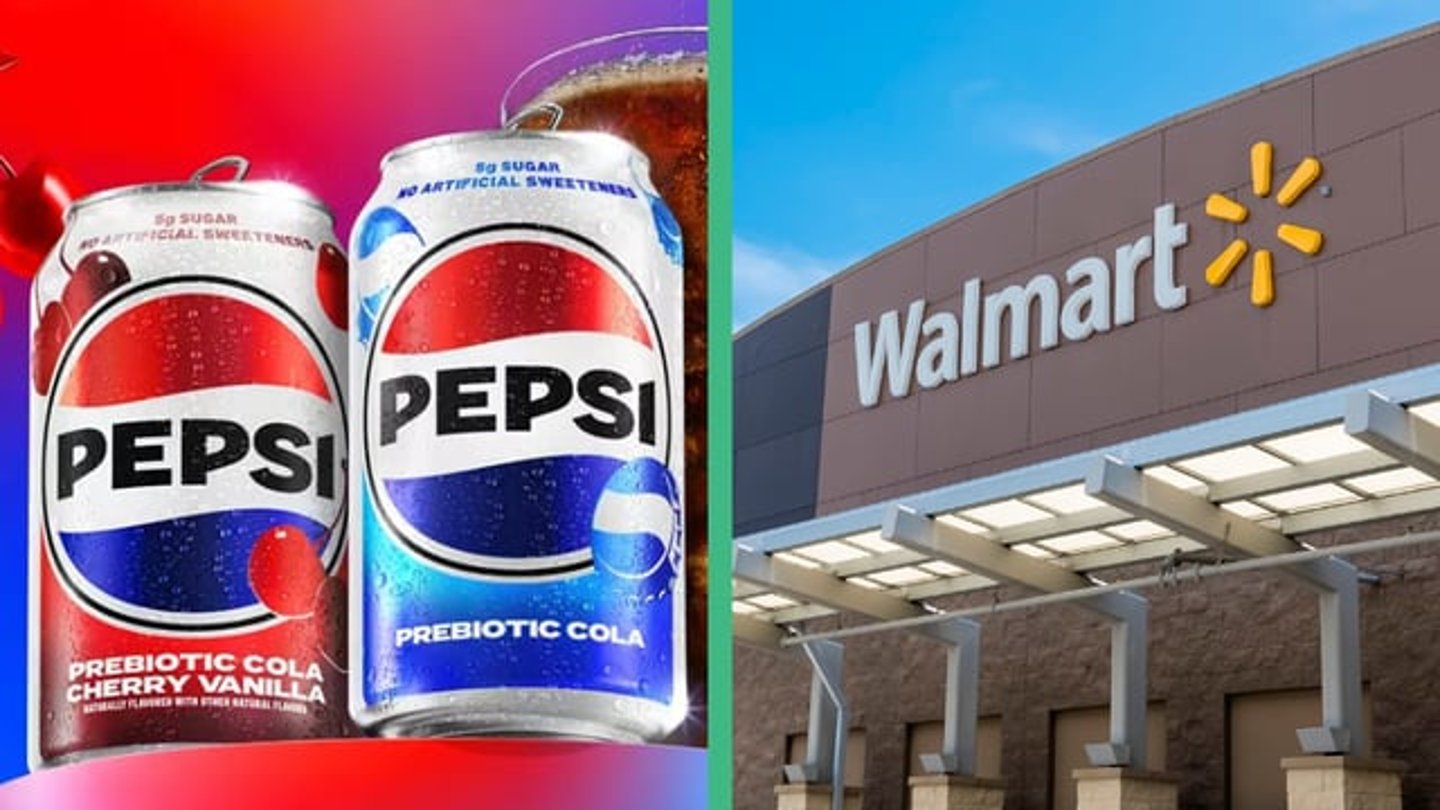
When PepsiCo debuted Pepsi prebiotic cola online on Black Friday, it sold out in less than 24 hours. While the sales velocity was impressive, the data generated in those 24 hours proved even more valuable.
During the Possible marketing and media conference last week in Miami, PepsiCo and Walmart Connect executives explained how PepsiCo used retail media signals to take Pepsi prebiotic cola from a limited online drop to a nationwide retail launch, and what the playbook means for consumer goods brands planning their next product introduction. On the stage was Mark Kirkham, chief marketing officer of PepsiCo Beverages North America, and Kyle McWhirter, group director and head of food at Walmart Connect.
Start Small, Learn Fast
Pepsi prebiotic cola — available in original cola and cherry vanilla with 30 calories, no artificial sweeteners and 3 grams of prebiotic fiber — flew off the digital shelves when it launched exclusively online on Black Friday 2025 across Walmart.com, Amazon and TikTok Shop.
That was by design. Rather than defaulting to a traditional national rollout, PepsiCo treated the holiday drop as a controlled test. The data it collected from that single weekend — who was buying, which flavor performed better and what messaging was landing — directly shaped the February retail launch.
"The learning we got in just that one weekend fundamentally allowed us to shift messaging, shift targeting, shift price pack architecture thinking," Kirkham said.
Cherry vanilla outperformed in early sales, with sentiment more than 80% positive and Walmart.com reviews averaging 4.5 stars. Months after the retail launch, online still accounts for 30% of sales, an unusually high figure for a beverage.
Lead With Taste, Not Function
One of the most useful insights to come out of the initial data is that the prebiotic positioning wasn't the primary purchase driver. Shoppers were coming in for the Pepsi taste first, with the functional benefit as a secondary consideration.
"What we learned was the great taste of Pepsi was ultimately driving people in," McWhirter said. PepsiCo adjusted its creative accordingly, moving taste to the lead and prebiotic to a supporting role — a change it could make quickly because the brand developed and managed all creative in-house.
That flexibility turned out to be as important as the insight itself. Dynamic creative is only useful if the organization can actually move on it.
"If you can react to it, that's real success," Kirkham said.
Retail Media as a Strategic Partner, Not a Placement
Kirkham pushed back on the term "retail media network" entirely. His preferred framing — "shopper engagement network" — reflects a broader shift in how PepsiCo approached the Walmart relationship. Rather than negotiating media buys in isolation, the two companies began sharing data earlier, co-developing launch strategy and aligning across merchant, marketing and media teams simultaneously.
"We need to share more data," Kirkham said. "We need to actually have more conversations early. If you go back five, 10 years, we weren't doing that."
The practical result of this more collaborative approach is that learnings informed not just Walmart-specific campaigns, but PepsiCo's national media strategy across all retail partners.
Rethinking the Funnel
Kirkham's larger argument was about the shape of the funnel itself. The linear brand-building model — awareness to consideration to conversion — no longer maps to how shoppers actually move through the path to purchase. Social generates a signal, which becomes a retail behavior that informs messaging and ultimately shifts basket composition in a continuous, non-linear loop.
"That funnel doesn't exist like that," he said. "It is a messy map."
For CPG brands still planning launches around a sequential model, the Pepsi prebiotic cola case study offers a compelling counterargument: build in flexibility from the start, go omnichannel first rather than retrofitting it, and design every launch to generate the data that funds the next one.
"Don't be transactional," Kirkham said. "Shopper engagement is what we do."
This article first appeared on the site of sister publication P2PI.