Mars, Kenvue Among CPGs Prioritizing Data Readiness From the Top Down

As consumer goods companies look to invest in cutting-edge technologies such as agentic AI, having strong data at the core is becoming increasingly important, as is installing leadership that has a deep understanding of how strengthened data practices can support those integrations.
Ash Athawale, SVP of the executive search practice at Robert Half, tells CGT that data and analytics have become a driving force in leadership priorities within the consumer goods industries.
And while this isn't a standalone trend that is replacing more traditional roles, data is increasingly integrated into decision-making across the C-suite. Data-driven strategies are leading to expanded roles as companies look to translate insights into operational improvements, he adds.
Major CPGs such as Mars and Kenvue recently installed data-savvy leaders.
There's still a chance to submit a nomination for CGT's Data Leadership Awards. The awards recognize leaders who are delivering transformative results with their customers or business partners, or within their organizations.
Data in the Spotlight
Mars recently promoted two executives, shifting their roles to put data at the center.
Kristen Daihes, previously the company's VP of supply chain, is now SVP of analytics, digital and data, overseeing data efforts within the supply chain, commercial and R&D functions, according to LinkedIn.
Additionally, Mars elevated Abhijit Dasgupta to the role of SVP global demand digital, data and analytics for Mars Snacking and CDIO for the Mars Retail Group. New to the title is the oversight of data and analytics as part of digital transformation efforts within the company's global sales and marketing functions.
These moves likely build on Mars' ongoing investment in AI. According to Kaarthikeyan Subramaniam, director of digital experiences platforms, Mars is making its workforce a little more AI-savvy. "We are not just building AI skills here, but I think providing an environment for associates to use AI effectively.”
At Kenvue, Teresa Reilly was named VP of data and AI governance, tasked with taking note of stakeholder recommendations, aligning priorities and laying the foundation for trusted data and responsible AI, according to LinkedIn.
This follows last year's hire of Mike Wondrasch as chief technology and data officer as part of efforts to drive growth using data and analytics to scale products and services.
Also last year, The Hershey Co. installed Amy Roe as its first VP of consumer and commercial intelligence, responsible for using an improved data strategy to gain a deeper understanding of what consumers really want and need. And The Estée Lauder Cos. hired Brian Franz as chief technology, data and analytics officer as part of a larger focus on global data and increased consumer personalization.
According to Athawale, these newer titles highlight the growing importance of data fluency at the leadership level.
Michael McGowan, an executive recruiter focused on hiring for CPG sales and marketing roles, agrees. As president of boutique agency Crescere Executive Search, he's seen companies struggle to find leaders who can connect data to real business outcomes.
"The title changes reflect that gap. A supply chain officer used to be rewarded for efficiency. Today, leadership wants someone who can use data to drive demand planning, pricing, retailer negotiations and e-commerce performance. The expanded titles are a signal that data is now central to growth, not just operations," he tells CGT.
Opportunities for Improvement
Research shows this type of data-led work isn't specific to just a few consumer goods companies, and there's still much work to be done.
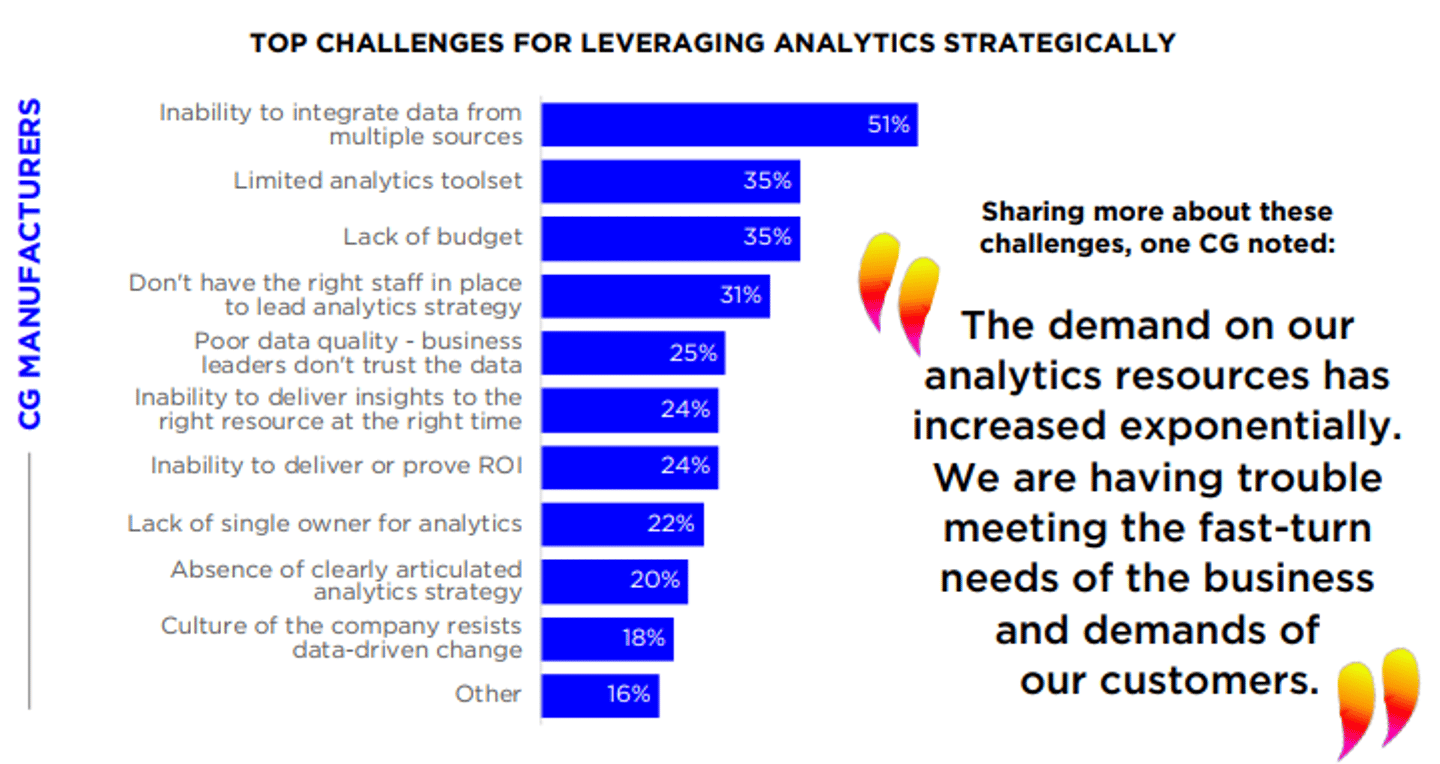
CPGs report that, overall, they are working on their internal data alignment, with 55% trending away from siloed work and making progress toward adopting a shared data model, according to CGT's 2025 Retail and Consumer Goods Analytics Study. Just over half note that their primary challenge has historically been the inability to integrate data from multiple sources.
Foundational work is still needed across the board, as 25% of CG executives report having poor data quality and 20% lack a clearly articulated analytics strategy.
Coca-Cola CEO James Quincey had recently shared in an earnings call the importance of focusing first on the infrastructure before investing in advanced analytics and technologies such as AI.
"As I tell people, if you just put it on top of a bad process, you're just going to get to a bad place faster and cheaper. You're not going to get to a better place," he said. "A part of what needs to happen is you need to fix some of the internal processes so that when you speed them up, you actually get a better result."
As companies integrate stronger foundational data into their organizations and bolster knowledge at the leadership level, the next step could be to develop that comprehensive expertise for AI within top executives' skill sets as well.
Carlie Idoine, VP analyst at Gartner, predicts that by 2027, organizations that emphasize AI literacy for executives will achieve 20% higher financial performance compared with those that do not.
She said that in order to unlock AI's full business value, companies must educate leaders on AI opportunities, risks and costs so they can make effective, future-ready decisions on AI investments, according to statements shared at a recent summit.