Why Reaching Gen Z Men Is a Growth Opportunity
Gen Z's $360 billion in disposable income has made the generation one of retail's most coveted demographics, and yet brands are still largely talking past its male half.
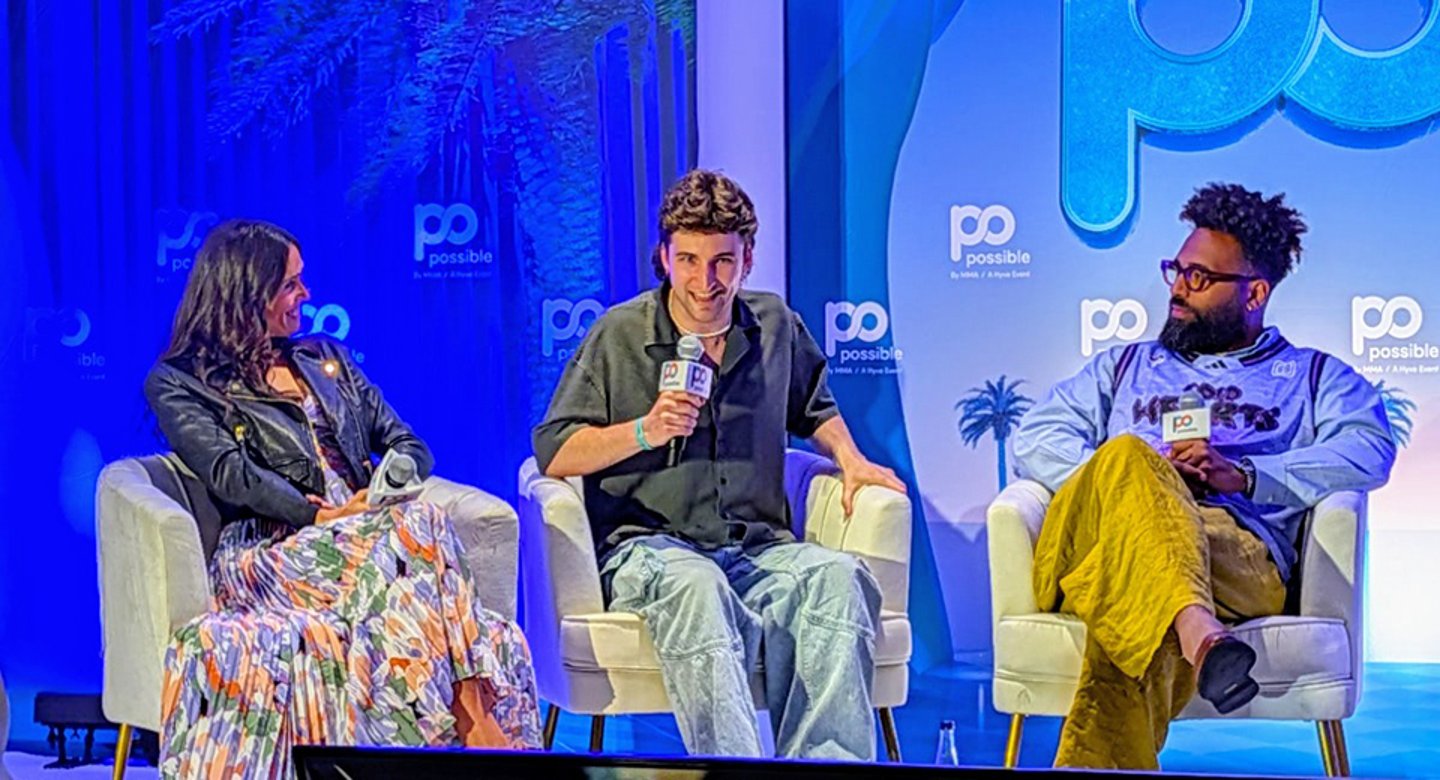
That was the central argument of "Beyond the Binary: How Gen Z Masculinity Is Evolving," a panel at the Possible marketing and media conference last week in Miami.
Moderated by Felipe Mendez, manager of UTA Marketing's Next Gen Practice at United Talent Agency, the session featured Andre G. Gray, chief brand officer at Overtime, a sports media company and league operator focused on Gen Z and Gen Alpha; Liz Plank, host of the "Boy Problems" podcast and author of a book on positive masculinity; and Anthony Po, co-founder and chief creative officer of Pufferfish, a marketing firm that helps brands go viral.
Together, they outlined where marketers are falling short and where the opportunity lies.
Stop Building Your Brief Around the Loudest Voices
The panel spent considerable time on Clavicular, a fast-rising streamer who became one of 2025's most-discussed influencers through his promotion of "looksmaxxing," an online subculture focused on optimizing physical appearance, often through extreme measures including injecting unapproved substances and so-called "bonesmashing," hitting the face with a hammer to alter bone structure.
Born Braden Eric Peters, his content has surged across TikTok and Kick in recent months and he has attracted considerable backlash for his controversial beliefs, tactics and speech.
See also: Inside Reckitt's Timely Retail Execution
When Mendez asked the room how many attendees were familiar with him before walking in, nearly every hand went up. For panelists, that level of awareness said less about the creator and more about the gap brands have left open.
"No brands talking to Gen Z guys, no direct person talking to Gen Z guys — and the people that fill that void, Gen Z guys are just excited that they're talking to them," Mendez said.
Plank pointed to who steps in when brands don't. "The people who took up that mantle, unfortunately, have bad intentions, and those are the loudest voices," she said.
The takeaway is not to build strategy around these figures, but to recognize and respond to what their rise signals. When direct, consistent engagement with Gen Z men is lacking, that vacuum will inevitably get filled.
Put a Gen Z Man in the Room and Trust Him
Po, who has been making content for Gen Z men for 13 years, encouraged brands to invite their target demographic into the ideation process. "Bring these Gen Z boys into the room. Ask them real questions. It's easy for them to go, ‘I like that, I don't like that,’" he said.
Unlike previous generations raised on a steady barrage of advertising, Gen Z grew up watching creators explain exactly why ads are fake, which is why they’re quick to dismiss and mock any content that feels too carefully managed or over-scripted.
Po noted that brands need to be prepared for feedback that challenges internal assumptions and comfortable departing from standard guidelines.
Gray tied this directly to performance. "Attention is dominated and dictated by authenticity," he said, pointing to Overtime's growth through content that treats audiences as participants rather than passive viewers.
Don't Confuse Whom They Watch With Who They Want to Be
As brands look to creators and talent, Gray cautioned against a common misstep: visibility does not necessarily equal aspiration.
"Are you finding guys that guys want to dress like, or are you finding guys that women know?" he said. The same logic holds whether the category is apparel, grooming or food and beverage. A creator with broad name recognition may not translate into influence if the target consumer doesn't actually identify with them.
The Contradiction Is the Insight
Plank offered the most useful reframe for marketers tempted to reduce Gen Z men to a single profile. They are, she argued, a genuinely contradictory cohort: more likely to self-identify with anti-capitalist politics but also disproportionate supporters of a capitalist-aligned administration; more nihilistic about the future but more likely than Gen Z women to want marriage.
Though these contradictions challenge the traditional marketing playbook, they represent what Gen Z men actually look like up close, and Planks warns that the brands that flatten them into a single persona will keep missing the mark.
"There's a huge opportunity to speak to them," she said. "I think they want leadership. They want guardrails. They want an aspirational kind of masculinity."
For brands, the opportunity sits with those willing to close the gap between how this audience is discussed in conference rooms and how it actually behaves in the real world.