From Campaigns to Content: How Brands Are Winning on TikTok Shop

If TikTok Shop was still a sidelined play for marketers in 2025, it may be time to bump it up on the priority list.
More than 71 million people shopped on the social media site last year — a nearly 25% uptick over 2024. That number is expected to climb 10.7% annually, with estimates pointing to more than 46% of users buying through the platform by 2028, according to Capital One Shopping research released in November.
And doing business on TikTok Shop has been a boon, at least according to brands speaking onstage at the National Retail Federation (NRF) Big Show on Jan. 12.
In short, it’s delivering on what brands need most right now: the ability to connect with consumers where they are, build community and capture real-time insights that boost the bottom line. When something goes unexpectedly viral, that’s an added bonus with a powerful halo effect.
Beyond simply providing another opportunity for conversion, Richard Cox, chief merchandising officer at Pacsun, said TikTok Shop has been a place for the company to “learn what’s working and what’s not.”
“We can move really quickly and react to the insights we get,” Cox said. “What may be underestimated is how you can use it for content creation as well, especially if you can co-create with the consumer.”
When it comes to consumer co-creation, the key is being reasonably open-minded — and resisting the urge to dictate what consumers should like about your brand.
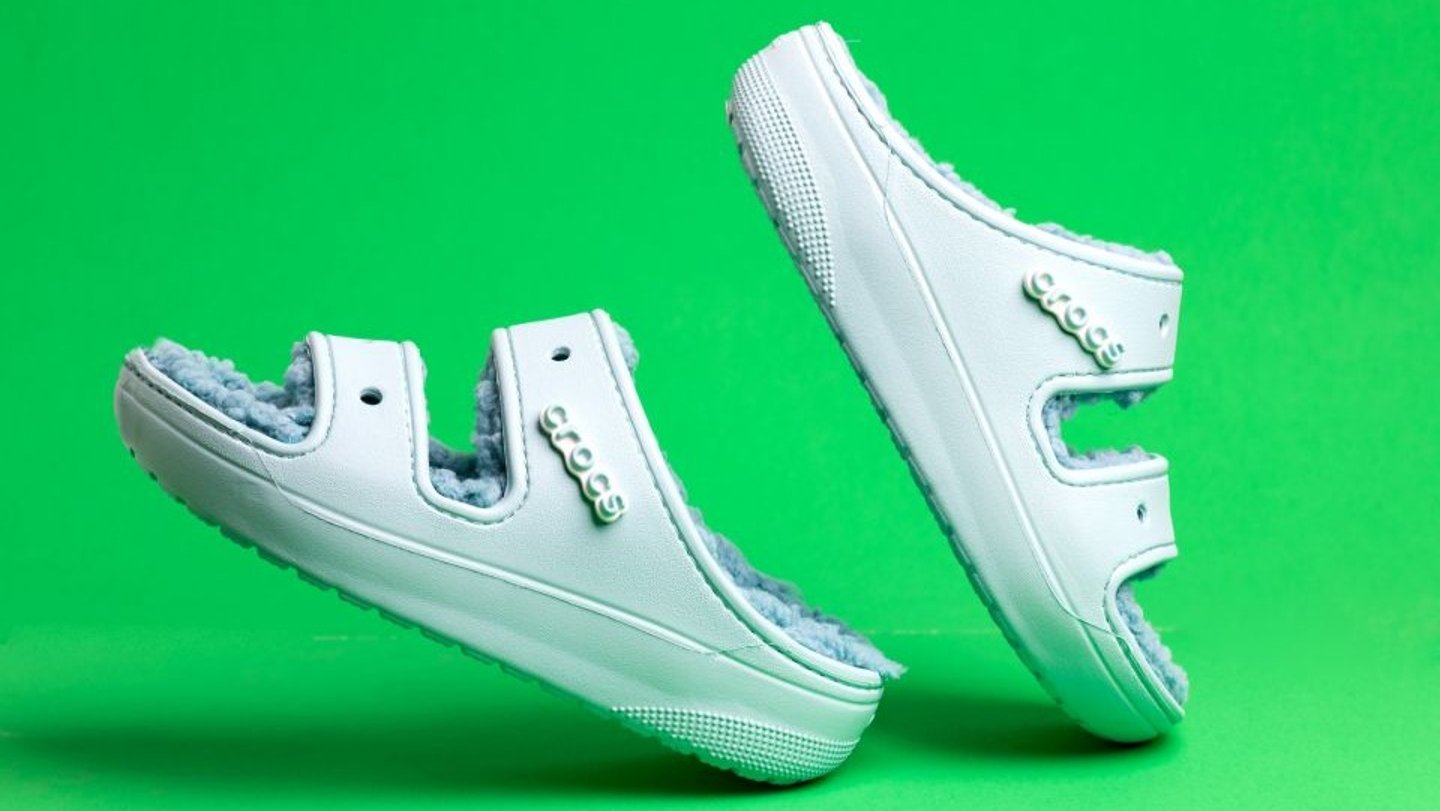
“You have to kind of try everything,” said Feliz Papich, senior vice president of digital technology, experience and insights at Crocs. “You have to let influencers make content, and you can’t be afraid of that content.”
Also Read: Clorox Tests Social-First Commerce With TikTok Shops — and Early Results Are Promising
Though the Capital One report showed livestream shopping has yet to fully catch on in the U.S. compared to its popularity in China, Crocs went all in on the format for its annual “Croctober” event, when it undertook 30 consecutive days of constant livestreaming in October. The experience generated valuable learnings about what resonates with audiences and what users want to see from influencers.
“That taught us so much about how content doesn't have to be perfect and you can leverage anybody to create it, and you can really connect,” Papich said.
Consumers, she added, want to be entertained more than shown a polished campaign, and they want to experiment with products. Beyond community building, Crocs used livestreams to introduce new offerings and demonstrate functionality so consumers could really get a feel for the products. The format also gave consumers a direct line to tell Crocs what products they want — and gave the brand another opportunity to listen.
The TikTok Shop upside has even extended beyond the platform itself.
“We even see it influence other marketplaces in sales,” Papich said. “So you need to have a full campaign strategy around all of those [social] moments.”
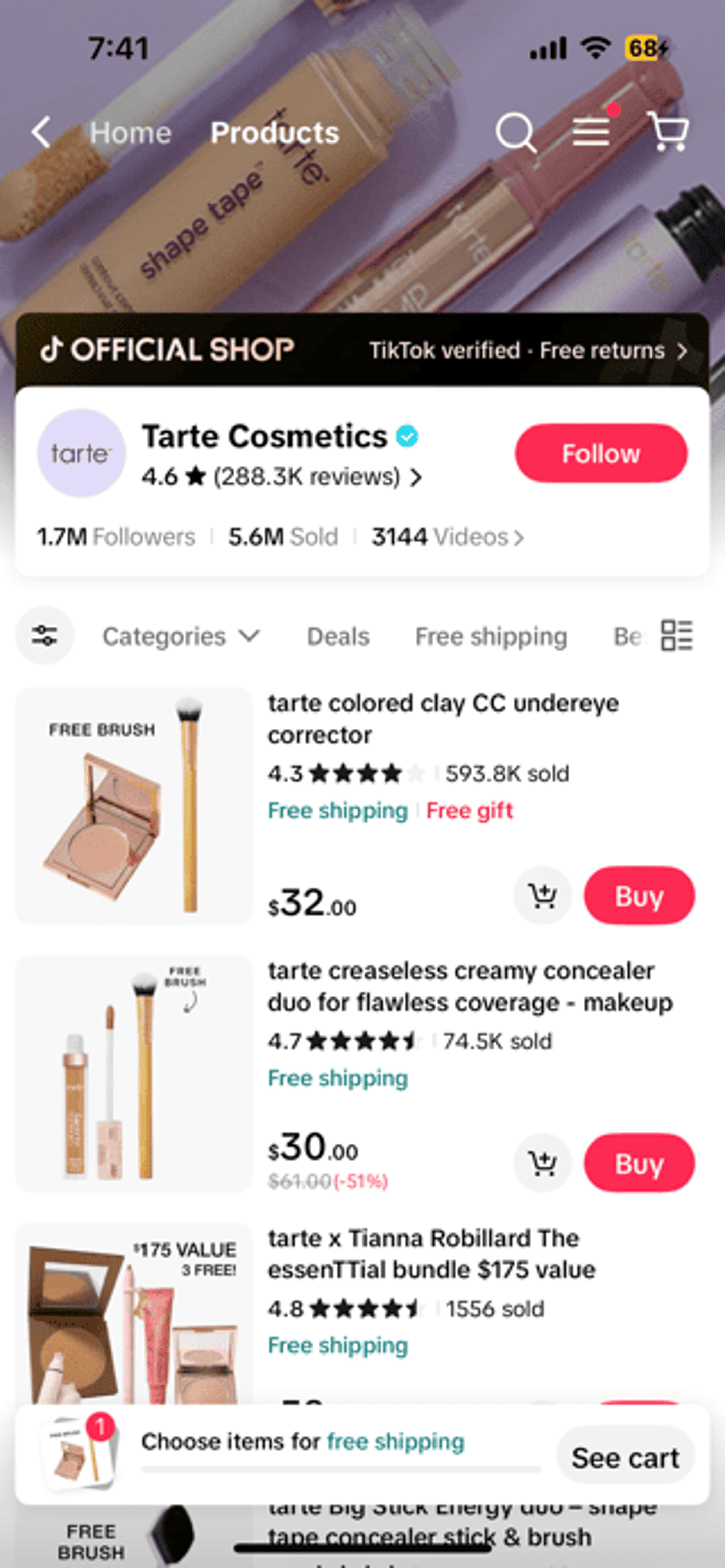
The experience has been similar for Kose’s Tarte Cosmetics, which was one of the earliest beauty brands to join TikTok Shop in 2023.
“Right now, we treat TikTok as a bonafide retailer,” said Jenna Manula Linares, VP of digital marketing at Tarte. “It is a channel that is driving a huge amount of sales for us.”
She also underscored that the potential for virality can’t be ignored. “I can go to bed tonight and wake up tomorrow, and one of [our] products can reach customers that never would have been introduced to Tarte,” she said.
As a result, Tarte now considers itself a “content engine” on TikTok, feeding the platform’s appetite for instant gratification and capitalizing on consumers’ increasingly short attention spans — sometimes delivering a product’s value in as little as three seconds.
“We know consumers are not coming to our website and scrolling [to learn about a product],” Manula Linares said. “If I can get my product in the hands of creators and they can do a really positive before-and-after, that product is absolutely going to sell.”
When creators got their hands on Tarte’s CC Undereye Corrector — going so far as to color beneath their eyes with black Sharpie marker to prove how the product performs — sales followed.
“On TikTok alone, we’ve sold nearly 6,000 units of that color corrector, and we can’t keep it in stock on Amazon or Ulta Beauty,” Manula Linares said. “This product has been viral for well over nine months now.”
Pacsun experienced a similar moment when a content creator with fewer than 5,000 followers went into her hometown store and purchased the brand’s Casey Low Rise Baggy Jeans. When the post she made about them went viral, Pacsun sold 11,000 pairs in one night.
“Since that moment in time, we’ve sold over 100,000 pairs of those jeans,” Cox said.
The halo effect, he confirmed, “is real:” the Casey momentum drove shoppers into stores asking specifically for “the viral TikTok jean” and fueled an overall spike in denim sales across the brand.
That success raises a critical question: Are supply chains positioned to handle unexpected viral demand?
Pacsun is set up to react quickly, according to Cox, but the company also makes strategic bets on products it expects to perform — and leads with those items on TikTok. Meanwhile, Tarte is “really intentional” about what it puts on TikTok Shop, curating a smaller assortment to ensure adequate inventory, Manula Linares said.
But as Papich admitted, “It kind of turns everything that we all know about demand planning on its head.”
Crocs does as much analysis as it can on what created the viral moments, and while there’s no way to determine what may have that effect the next time around, they are able to glean patterns, pick up on social cues and understand more about what the customer is gravitating toward.
Of course, the bottom line is still the bottom line for most brands considering how much effort to put into selling to TikTok. For Crocs, that aspect of the platform has been “pretty good.”
“Out of a lot of the marketplaces, it’s a really valuable one from a profit standpoint,” Papich said. She noted that TikTok Shop can also require less investment in the ad space since Crocs can tap into existing creators that are already using the platform and are likely to engage with the brand.
The media mix model plays an important role here, Papich added.
“You want to be able to talk to everyone on your team about how TikTok is going to affect their part of the business,” she said. “For everyone to believe in it, you really do need the discipline to measure in that way.”
Even if you don’t see the hard numbers, Cox said, “There is a halo effect in just how [consumers] are interacting with your product.”
Like many brands, TikTok itself is still experimenting with its social commerce offering. But for those already participating, the platform appears worth the effort.
“They are experimenting, they are building the plane while they’re flying it,” Papich said. “The best thing you can do is really lean in with them. If TikTok is willing to give you the partnership and provide suggestions, do it.”
TikTok may approach brands with new opportunities — and when that happens, Cox’s advice is simple: “Don’t get too methodical with it. Just try it,” he said. “And go in with an open mind when it comes to releasing the keys to your customer for content creation.”
This article first appeared on the site of sister brand P2PI.