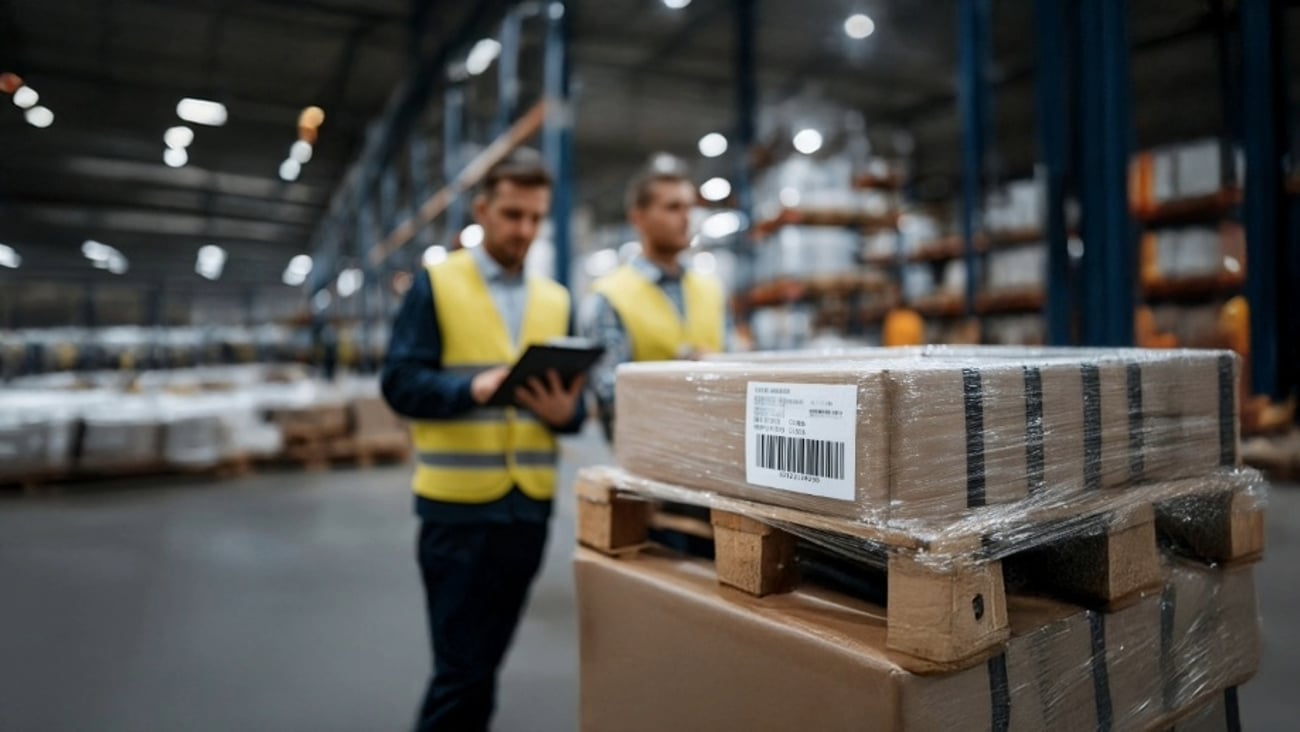

AI-Powered Supply Chain: Automating Response to Disruption
Consider a mid-sized consumer goods manufacturer struggling with supply chain disruptions. Their team of 25 full-time planners spends nearly half their time on manual exception handling, leading to frequent stockouts due to raw material delays and significant revenue loss from incomplete production. The high operational costs from manual processes limits their ability to scale without adding headcount, while inconsistent decision-making led to suboptimal outcomes.
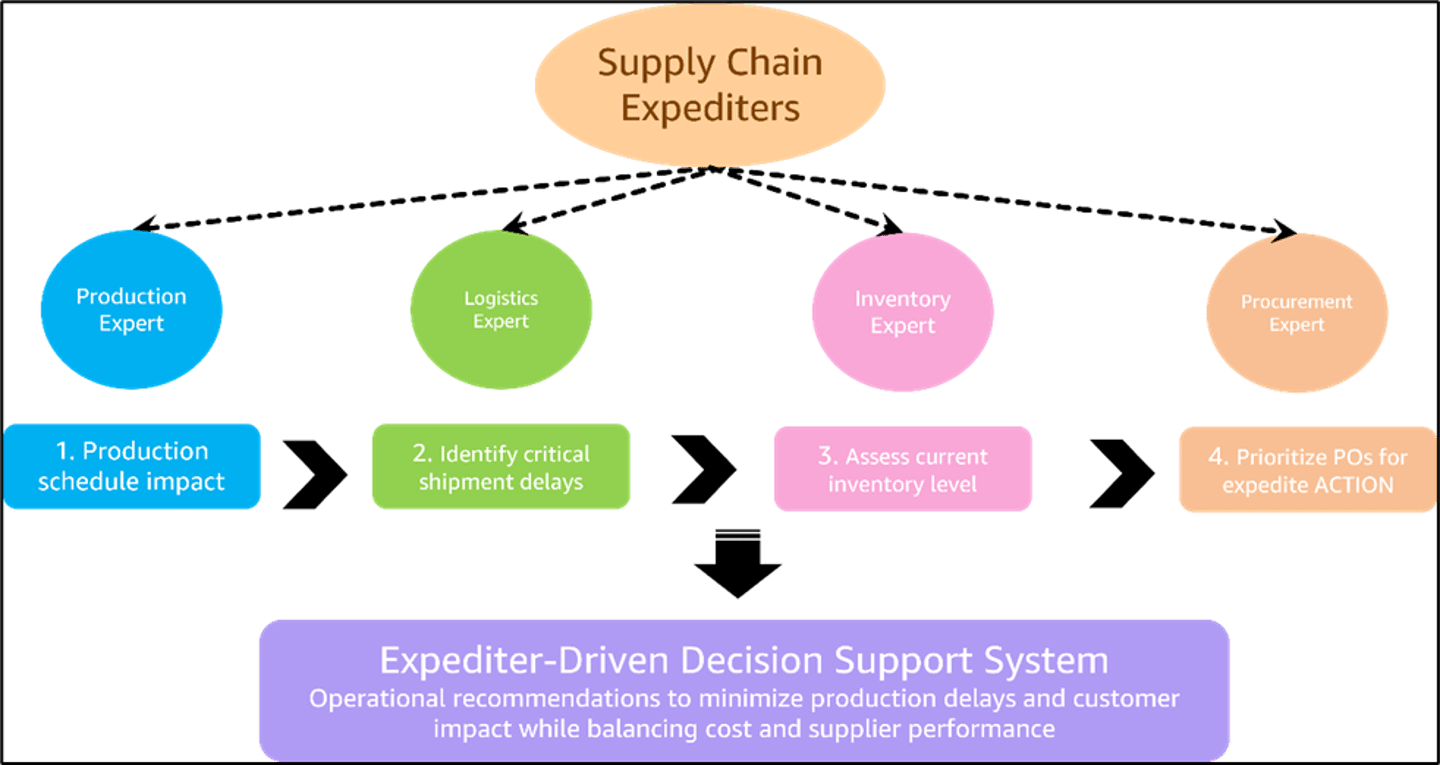
In today's complex supply chains, scenarios like this are quite common. Disruptions like shipment delays or inventory shortfalls can quickly cascade into missed production schedules, lost revenue, and strained supplier relationships. Traditional approaches rely on supply chain professionals—often called expediters—to manually coordinate across departments, identify root causes, and deploy corrective actions. This method is slow, reactive, and difficult to scale as organizations grow.
The Hidden Cost of Manual Expediting
When supply chain disruptions occur, expediters must bridge silos between production planning, logistics, inventory management, and procurement. These professionals devote significant portions of their workday to "firefighting" issues, creating a substantial drain on resources and taking time away from strategic planning activities. The delays in response due to disconnected data systems, combined with inconsistent decisions based on tribal knowledge rather than data, lead to missed opportunities to recover revenue from delayed production. This reactive approach becomes increasingly unsustainable as supply chains grow more complex and disruptions become more frequent.
A New Approach: AI-Powered Orchestration
To address these challenges, companies are turning to multi-agent supply chain orchestration systems powered by artificial intelligence. These systems leverage specialized AI agents that work collaboratively to monitor supply chain systems for potential disruptions, analyze data across previously siloed systems, recommend data-driven corrective actions, and execute approved changes automatically. By connecting previously disconnected data sources and systems, these AI agents can provide a comprehensive view of the supply chain that was previously impossible to achieve.
How It Works
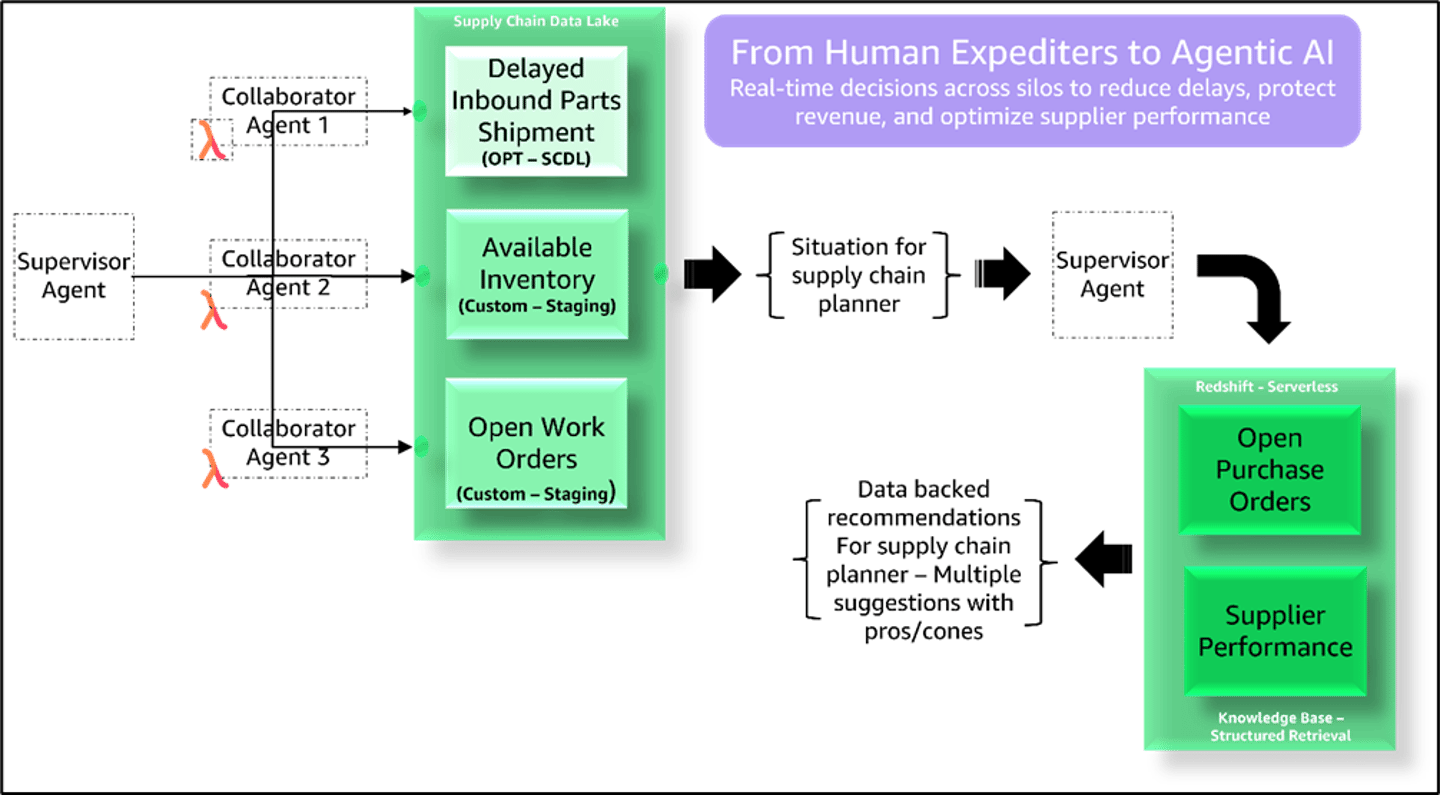
The AI-powered orchestration system operates through four key stages that transform how organizations handle supply chain exceptions. In the first stage of exception detection, AI agents continuously monitor shipments, inventory levels, and production schedules to identify potential disruptions before they impact operations. This proactive approach allows organizations to address issues before they escalate into larger problems.
During the analysis and recommendations stage, a supervisor agent coordinates across specialized collaborator agents to evaluate options like expediting purchase orders or resequencing work orders. Each recommendation includes clear business impact analysis, ensuring decision-makers have complete context for their choices. The system considers multiple factors including supplier performance, inventory risks, and production schedules to generate optimal recommendations.
The human review stage maintains critical oversight while streamlining the decision-making process. Supply chain planners review AI-generated recommendations with full context on trade-offs between different options. This hybrid approach combines the speed and analytical power of AI with human judgment and experience. Planners can quickly assess options and select the most appropriate action based on comprehensive data and clear impact analysis.
Once a decision is made, the execution stage kicks in automatically. Execution agents update relevant systems and notify stakeholders without requiring manual data entry or coordination. This automation eliminates many of the time-consuming administrative tasks that traditionally burden supply chain teams, while ensuring all systems remain synchronized and up-to-date.
Business Impact
AI-powered orchestration turns a reactive, manual process into a proactive, automated one. By implementing an AI orchestration system, consumer goods companies can transform their exception management process and overall supply chain performance. The system's ability to continuously monitor for exceptions, rapidly analyze options, and execute decisions can help companies recover previously at-risk revenue and handle increasing supply chain complexity more agilely.
Looking Ahead
While AI agents won't replace human planners, they provide fast, data-driven support that makes exception handling more scalable and consistent. As these systems evolve, they'll handle increasingly complex scenarios automatically—allowing supply chain teams to focus on strategic planning rather than constant firefighting. The technology continues to advance, with new capabilities being added to handle more sophisticated exception scenarios and provide even deeper insights.
Organizations looking to stay competitive in today's dynamic market environment should consider how AI orchestration could help transform their supply chain operations. The ability to automate exception handling while maintaining human oversight offers a powerful combination of efficiency and control. By leveraging AI agents to handle routine disruptions, companies can free their experienced professionals to focus on more strategic initiatives while improving overall supply chain resilience. This transformation from reactive to proactive management represents the future of supply chain operations in an increasingly complex global marketplace.