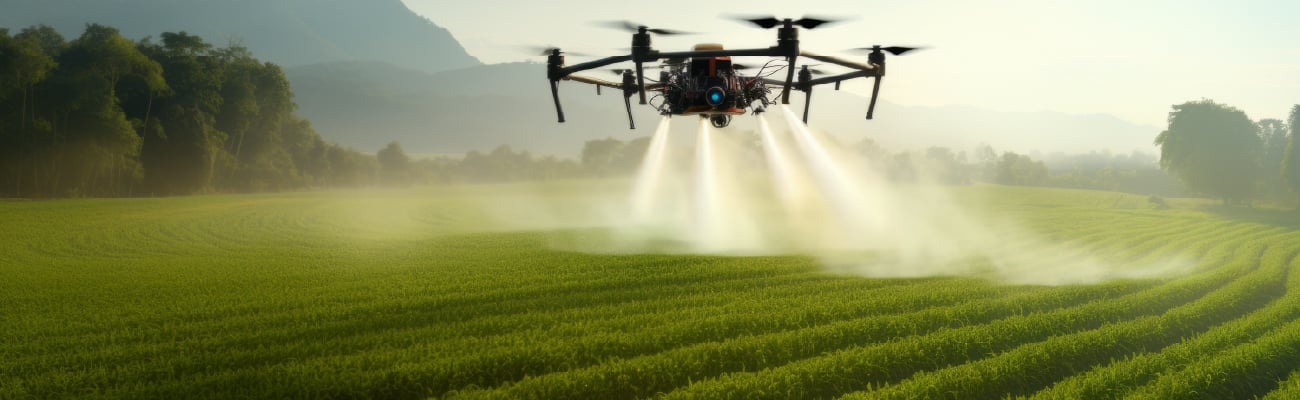

From Farm Data to Supply Chain Confidence
In 2026, food supply chains are still grappling with a fundamental challenge: limited visibility at the source. Recent years have shown how labor shortages, logistics bottlenecks, climate volatility, and shifting demand can send ripples across operations in sourcing networks. For many organizations, the blind spot remains upstream, where gaps in information make it difficult to foresee risks, assure quality, and navigate supply uncertainty.
While regulators want faster traceability and consumers seek accountability regarding origin, production methods, and ingredient quality, farming networks still rely on manual records and fragmented communication, making it challenging to capture reliable data on crop health, field conditions, harvest schedules, and output quality.
To build resilient supply chains, farm-level data must serve as the foundation for sourcing, quality, and long-term trust.
Why Supply Chain Transparency Remains Elusive
The consequences of limited transparency are visible across sourcing, planning, and quality management. Traditional harvest forecasting has only 70–75% accuracy, leading to supply-demand mismatches, procurement inefficiencies, and missed revenue opportunities. Consolidating information across growers and regions is a mammoth task as 69% of companies still rely on manual processes for daily sourcing activities (TraceGains).
When food safety incidents occur, limited traceability makes it difficult to quickly isolate issues to a specific farm, field, or batch, increasing both cost and operational burden. In 2024 alone, the US food industry recorded 422 FDA recall events with direct costs estimated at $1.92 billion.
As a result, organizations learn of problems only after they begin affecting sourcing, quality, or supply.
Farm Digitization: Building Transparency at the Source
Farm digitization closes this gap by changing how F&B companies engage with their sourcing networks. For instance, through grower management platforms, farmers can digitally record field activities, receive agronomic guidance, document quality parameters, and interact directly with buyers. Mobile applications with local language support and offline access connect farmers across regions, even in areas with limited connectivity.
Meanwhile, companies get a more complete and reliable view of agricultural operations. Real-time information on farm activities, crop quality, and field conditions is available in one place. This gives everyone, from growers to sourcing teams and quality managers, a clearer view of what is happening in the field.
Transparency is the first step. The next challenge is translating farm-level information into insights that help organizations plan, source, and manage quality more effectively.

Turning Visibility into Better Decisions
Farm digitization combines field-level information with AI-powered analysis. Data on crop growth, weather patterns, soil health, and historical yields can be used to generate more reliable insights into future supply conditions.
AI-powered seed planning can recommend suitable crop varieties and planting schedules, while yield estimation models improve confidence in harvest forecasts. Predictive quality assessment can identify potential raw material quality concerns before harvest, allowing earlier intervention. Early risk alerts connected to weather events, pest outbreaks, or changing field conditions give teams additional time to prepare before disruptions affect supply.
These capabilities enable procurement and supply chain teams to move from reacting to disruptions to anticipating them. When a potential shortfall, quality issue, or weather disturbance is identified weeks or months in advance, companies are well prepared to respond and limit its impact. They can work closely with growers, adjust sourcing plans, and optimize inventory and supply decisions before shortages affect operations.
Turning Insight into Impact
Several organizations are already applying these capabilities to strengthen sourcing and planning across farm networks. Case in point, a global F&B company partnered with Tech Mahindra to digitize grower engagement and planning across thousands of farmers. Through a farm-centric grower management platform and AI-enabled planning capabilities, the company brought more structure and predictability to harvest planning. As a result, harvest forecast accuracy improved by 20–25%, sourcing teams reduced emergency procurement costs by 15%, and inventory buffer requirements were lowered by 10–12%, improving working capital efficiency while ensuring more reliable supply.
For a multinational frozen food company, Tech Mahindra implemented a connected farm-to-factory ecosystem that improved yield visibility, reduced cold-chain waste, and accelerated compliance reporting. Yields across plot farms increased by 10–15%, post-harvest losses were reduced by 12–18%, and farm-to-factory traceability improved to 95%+ batch-level visibility. Stronger transparency and early quality insights also enabled 30–40% faster compliance reporting and quicker response to sourcing and quality risks.
The Shift Toward Smarter Farm Operations
At Tech Mahindra, we envision farm digitization as the foundation of an intelligent farm-to-shelf ecosystem for Retail & CPG enterprises. By combining grower platforms, AI-driven forecasting, traceability, and supply chain control towers, we help clients improve supply predictability, quality assurance, and sourcing resilience. Going forward, agentic AI will enable proactive risk management, automated decision-making, and real-time collaboration across farmers, procurement, quality, and logistics team-creating more agile, transparent, and sustainable supply chains.